Consumers Behavior
 |


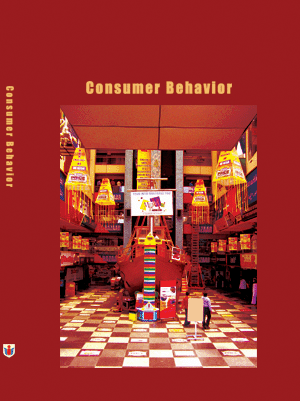
Details
Chapter Code: CBC08
Textbook:
210 X 275 mm approx.
Short Case Studies
Detail Table of Contents
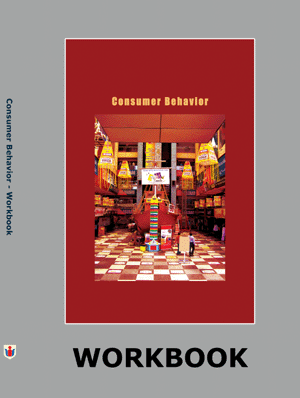
Workbook:
Pages : 304; Paperback;
210 X 275 mm approx
Pricing
Textbook Price: Rs. 750;
Workbook Price: Rs. 700;
Shipping & Handling Charges: Rs. 50 per book;
Books Available only in INDIA
Chapter Price : Rs. 100
To download this chapter in electronic format, click on the button below,
and select the chapter from the list of available chapters.

Buy Now
To order the entire book click on the button below, and select the book from
the list of available books:
Please allow 5 to 10 days for delivery of the
Book.

Consumer Behavior : Chapter 8
SUMMARY:
A reference group serves as a frame of reference for an individual and influences his/her behavior. Reference groups can be classified in many different ways, based on degree of influence (normative reference group and comparative reference group); type of interaction (direct reference group and indirect reference group); and type of influence (positive reference group and negative reference group).
|
|
Some important reference groups are friends, shopping groups, work groups, virtual communities, brand communities, and consumer action-groups. Celebrity appeal, expert appeal, common man appeal, executive and employee appeal, and spokes-character appeal are some of the important reference group appeals used by marketers to influence consumers' purchase decisions.
Opinion leaders are individuals to whom an opinion seeker turns for advice or product related information while making purchase decisions. Opinion leadership can be a result of passive exchange of information in a group discussion or of information being actively exchanged. The major features of opinion leadership are credibility, exchange of information as well as advice related to one core-category and two-way flow of information.
Opinion leaders are generally knowledgeable about one core category and some related categories. There are some special types of opinion leaders who differ in their area of knowledge and influence over the opinion seeker – generalized opinion leaders (knowledgeable about multiple product categories), market mavens (knowledgeable about general market trends), surrogate buyers (experts hired to make product-related recommendations and even purchase on behalf of the consumer), and purchase pals (strong and weak tie people who accompany and assist an individual in shopping).
There are four methods to identify an opinion leader – self-designating method, sociometric method, key informant method, and objective method. Word-of-mouth is an interpersonal communication channel through which people share information. Word-of-mouth, if positive, can lead to huge gains for the marketer, and if negative, can ruin the brand image. Marketers use word-of-mouth in their favor by creating a buzz around a product to catch the attention of the target segment and influence sales.
Related Case Books:-
 Case Studies in Consumer Behavior
323 pages, Paperback,
Available only in INDIA

Related Textbook:-
 Marketing Communications Textbook
210 X 275 mm approx,
Price: Rs. 750;
Available only in INDIA
