
General Insurance Corporation of India
Details
BSTR111
30
2002
YES
500
General Insurance Corporation of India
Insurance
India
Corporate Strategy
Abstract
The case provides a detailed insight into the strategies adopted by Indian insurance major Life Insurance Corporation (LIC) of India in various areas. The case provides information about the company's history, its evolution, subsidiaries and the products offered, and examines its marketing, finance, and human resources strategies. Details about the IT initiatives taken up by the company in its technology drive are also covered. The case also provides an insight into the life insurance industry's structure in India and the changes that took place after the entry of private players into the market. The case examines how LIC is gearing up to combat the competition from private players and provides a detailed note on the Indian insurance market. The case also discusses the change in the marketing strategies of GIC before and after the liberalization of the insurance industry in India. It also talks about the conversion of GIC into a national reinsurer and the delinking of the four subsidiaries from GIC. Finally, the case includes a detailed note on the general insurance industry in India.
Learning Objectives
The case is structured to achieve the following Learning Objectives:
- Indian general insurance industry before and after the entry of private players.
Contents
General Insurance Corporation of India
"We are all gearing up to reposition GIC as a major global reinsurer.”
- A top GIC official, in September 2002.
INTRODUCTION
The General Insurance Corporation of India (GIC), a public sector enterprise, was also the largest non-life insurance company and one of the largest financial institutions in India. GIC used to sell non-life insurance products and related services. In 2001, GIC reported a gross direct premium income of Rs 107.72 billion2. By April 2002, GIC had a net worth of Rs 23 billion.
GIC had been operating through its four subsidiaries – National Insurance Company Limited, New India Assurance Company Limited, Oriental Insurance Company Limited and United India Insurance Company Limited till December 2000. GIC and its subsidiaries had a network of more than 4,208 offices in India and their customer interface included agents, development officers and employees at its branch, divisional and regional offices of its four subsidiaries. The company had a workforce of 85,000. GIC also operated in the international markets in more than 30 countries, either through branches or subsidiaries.
GIC offered a variety of non-life insurance policies in the fire, marine, theft, and other miscellaneous segments. It also offered health insurance through its Mediclaim policy. While some of the policies offered by GIC, like motor insurance, were mandatory, others were designed exclusively for specific segments – for instance, the rural insurance, which included insurance cover for huts, cattle and livestock, hens and crops.
In November 2000, with the liberalization of the insurance industry, GIC became a national reinsurer – the official body for undertaking reinsurance business for all private and government organizations in the insurance industry. Many private players had entered the general insurance market, which led to a significant increase in competition. Competition was expected to be more intense in the non-life segment than the life segment, as the term of the non-life policies was very short, and customers could switch between companies.
Based on the recommendation of the consultants – PriceWaterhouse Coopers and MP Chitale –all the subsidiaries of GIC were restructured, in December 2000, as independent insurance companies. At the same time, the General Insurance Public Sector Association was formed to deal with the common issues related to the four subsidiaries. After the restructuring, New India Assurance Company, one of the four subsidiaries of GIC, became India's largest non -life insurer.
GENERAL INSURANCE IN INDIA
The history of general insurance dates back to the industrial revolution in the western countries and the growth of sea-faring trade and commerce during the 17th century. The concept of general insurance came to India during the British rule. General insurers from Britain and other countries carried out the general insurance business.
In 1928, the Indian Insurance Companies Act was passed to enable the government to collect statistical information about both life and non-life insurance business transacted in India by Indian and foreign insurers including provident insurance societies. In 1938, the Indian Insurance Companies Act was consolidated and amended by the Insurance Act 1938 to protect the interests of the public.
The Insurance Act of 1938 was amended in 1950, which resulted in far-reaching changes in the insurance sector. These included a statutory requirement of equity capital for companies carrying on insurance business, ceiling on share holdings in such companies, stricter control on investments, submission of periodical returns relating to investments and such other information to the controller. The controller could also call for appointment of administrators and put a ceiling on expenses of management and agency commission for mismanaged companies.
By early 1970s, there were about 100 Indian insurers carrying on the general insurance business in India. Malpractice and mismanagement had crept into the management of these companies. Some insurance companies either liquidated, or cheated the policyholders. There were complaints of falsification and denial of claims, interlocking of funds and other malpractices by many insurance companies.
To protect public funds, the government started considering nationalization of the insurance industry. In 1971, as a prelude to the nationalization of the general insurance industry, the GOI took over the management of all private general insurance companies. The main objective of this nationalization was to channelise the insurance funds for the benefit of the community at large.
THE PRE-LIBERALIZATION ERA
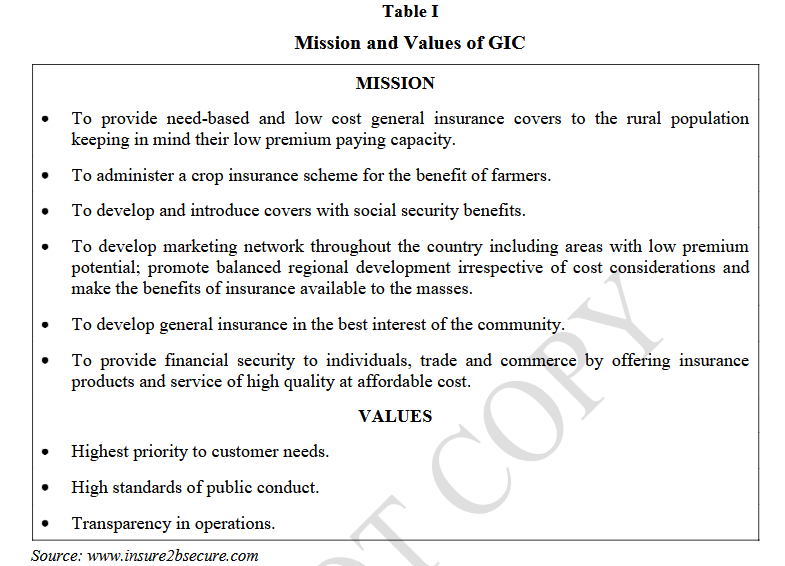
GIC was set up as a holding company in 1972 as per the General Insurance Act 1972, under which the general insurance industry in India was nationalized. Before nationalization, the general insurance business in India was more urban-centric and served only organized trade and industry. Therefore, GIC was established with a mission to offer need-based insurance to the rural population (Refer Table I).
At the time of nationalization, there were 107 Indian and foreign insurers offering general insurance products. These companies were merged and grouped into four companies including National Insurance Company Limited (NICL), New India Assurance Company Limited (NIACL), Oriental Insurance Company Limited (OICL), and United India Insurance Company Limited (UIICL). The companies were subsidiaries of GIC. The companies were grouped region wise – NICL in Mumbai (western region), NIACL in Kolkata (eastern region), OICL in New Delhi (northern region) and UIICL in Chennai (southern region).
GIC was set up and registered as a holding company with the four subsidiaries, under the Insurance Act 1938, in accordance with the provisions of the General Insurance Business (Nationalization) Act, 1972. GIC was fully owned by the government of India (GOI), that is, its entire paid-up capital was subscribed by the GOI. GIC, in turn, fully owned the paid-up capital of its four subsidiaries. The four subsidiaries operated all over the country, competed with each other, and offered all types of general insurance. The aviation insurance of the national airlines and crop insurance were solely handled by the GIC.
The four subsidiaries ran the general insurance business across the country, and 20% of the their business was given to the GIC as per the obligatory 'reinsurance premium' on a quota share basis. The general insurance policies offered by GIC?s subsidiaries in India were of five types – fire, marine, motor, theft and miscellaneous. Out of the five, fire insurance accounted for the largest share of the general insurance business, and the miscellaneous segment came next. Marine insurance was not very popular in India.
ORGANIZATIONAL STRUCTURE
GIC was a holding company, separate from its subsidiary companies. It was responsible for broad policy matters that could affect the general insurance industry in India. The company did not offer any direct insurance policies except the aviation insurance policies of Air India, Indian Airlines, Hindustan Aeronautics and Crop insurance. From the reinsurance business, GIC received 20% of all direct business written in India by its subsidiaries. Apart from the four subsidiaries, GIC set up the GIC Asset Management Company to manage the GIC Mutual Fund, GIC Housing Finance, and Export Credit Guarantee Corporation.
The four subsidiaries underwrote all types of general insurance directly as well as through reinsurance in India. They also operated in the international market. All the companies were autonomous, and had their own Boards of Directors and management teams. The organizational structure of the companies was (Refer Figure I):
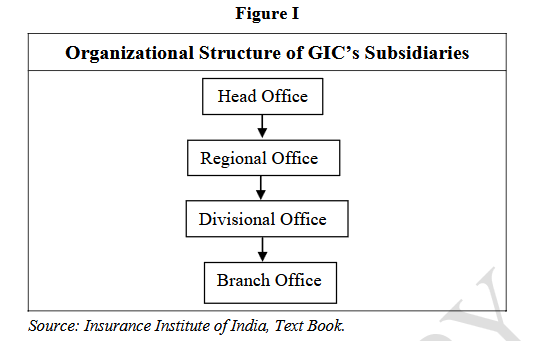
The head offices of the subsidiaries were responsible for the planning, direction and control of Indian and foreign businesses. They also took care of final accounts, investment, reinsurance and other specialist functions. Their regional offices were located in the metros, and controlled the divisional and branch offices in their jurisdiction. Divisional offices were responsible for the development of business and also supervised the branches, if any, in their jurisdiction. The developmental operation of the divisional offices included appointment of inspectors and agents, marketing, planning and procurement of business. The administrative operations of these offices included issue of policies, settlement of claims, maintenance of accounts and general administration.
The functions of the branch offices were the same functions as those of divisional offices. However, they were not empowered to appoint inspectors and settle claims except claims regarding the motor damage, cattle claims and other claims with certain limits. In addition, the branch offices were responsible for the development of business directly and through inspectors and agents, collection of premium, and issuing of receipts, cover notes and policies.
GIC's four subsidiaries in India were:
National Insurance Company Limited
NICL, established in 1906, was involved in the general insurance business. The company was managed by a private body until 1972, when it was nationalized under the General Insurance Act. In the same year, 33 companies – 22 foreign and 11 Indian – were amalgamated with NIC. The new entity became a subsidiary of GIC.
NICL was headquartered in Kolkata and had about 965 branch offices with more than 20,000-trained workforce. It also operated in countries like Nepal and Hong Kong. In 2000-01, NIC reported a total volume of business5 worth Rs 19.0648 billion.
New India Assurance Company Limited
Set up by Sir Dorab Tata in October 1919 in Mumbai, NIACL was the largest non-life insurer in India, and also in the Afro-Asian region excluding Japan. Within ten years of establishment, NIACL became a leader in the Indian insurance industry. It offered a wide range of insurance products ranging from bullock cart insurance to satellite insurance. From the very beginning, the company offered comprehensive policies like cash-in-transit, All Risks insurance, Accountants' indemnity and Profit insurance. As a part of the nationalization drive in 1972, 23 other companies were amalgamated with NIACL and made a subsidiary of GIC. In 2001-02, the company recorded a business volume of Rs 26.68 billion. According to the company's website, NIACL was the first to
- Set up an Aviation Insurance Dept in 1946
- Handle the Hull Insurance requirements of the Indian Shipping Fleet
- Establish its own Training School
- Introduce the concept of 'Model Offices training'
- Create technical departments in Engineering insurance
- Offer Satellite insurance
NIACL's network was comprised of 26 regional offices, 397 divisional offices and 688 branch offices. It had a 32% market share in the Indian general insurance market in 2001. Eventually, NIACL expanded globally and operated in about 20 countries
Oriental Insurance Company Limited
OICL was established in 1947 in New Delhi. It operated through a network of 21 regional offices, 311 divisional offices and 635 branch offices across the country. Its overseas branches were located in Nepal, Kuwait and Dubai. The company was into general insurance business including rural insurance covers. It specialized in special insurance covers for large projects including power, steel, chemical and petrochemical plants. In 2000-01, OICL reported a total volume of business worth Rs. 18.4923 billion. According to the company website, OICL was the first to:
- Have underwritten the biggest Grass Root Refinery Project, Reliance Jamnagar refinery.
- Have issued a Package Policy under mega risk to PSU Oil giants.
- Have issued Advance Loss of Profits policy in India.
- Have issued Directors & Officers liability policy in India.
- Introduce Kidnap & Ransom cover in India.
- Have issued StockBrokers and Stock Exchange custodial services policy in India.
- Have issued tailor-made cover for Cellular Communication systems.
- Have front office computerization drive in India.
- Have a system of in-house loss assessment up to statutory limits.
- Have started motor third party conciliatory proceedings.
The company's policies were popular. Some of its popular policies included electronic equipment insurance policy, group Mediclaim policy, householders insurance policy, individual Mediclaim, Janata Personal Accident, Kissan Package Insurance, motor cycle policy B, Nagrik Suraksha, Office Umbrella, Overseas Mediclaim Business and Holiday, Overseas Mediclaim Employment and Study, personal accident policies (like individual, private car policy B), and shopkeepers insurance.
United India Insurance Company Limited
UIICL was the second largest non-life insurance company in India. It focused on Fire, Marine, Motor and Miscellaneous insurance segments. It operated in India through 723 branches, 368 divisional offices, 24 regional offices and had employed more than 21,000 employees. The company's total volume of business stood at Rs 20.4332 billion.
Apart from offering general insurance through its four subsidiaries, GIC also entered mutual fund and housing finance businesses. These businesses were promoted jointly by GIC, its subsidiaries and banks/financial institutions. The businesses included:
GIC Asset Management Company Limited - GIC Asset Management Company Limited. (GICAMC) was set up by GIC and its subsidiaries in 1993. The company was established with the primary objective of managing the operations and investments of GICMF. While GIC and its subsidiaries held 49.5% equity stakes in GICAMC, SC
Management Company, an affiliate of Soros Fund Management, US, held 40% stakes and the remaining 10.5% was held by GIC Housing Finance.
GIC Mutual Fund
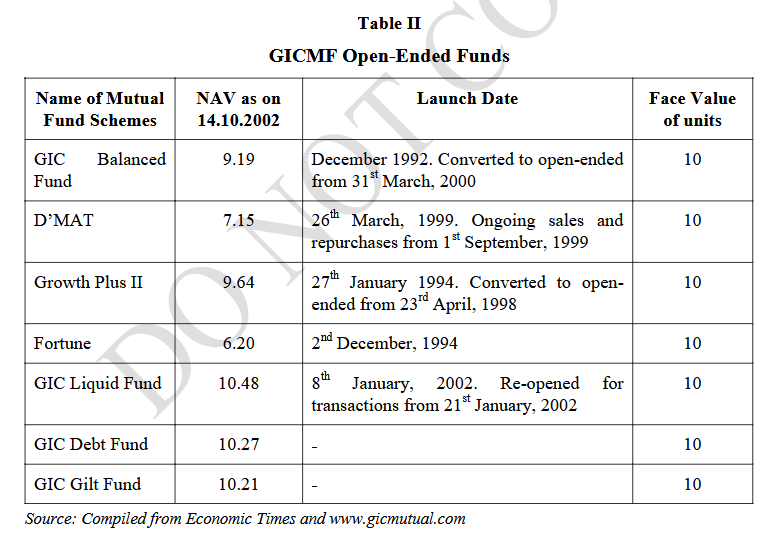
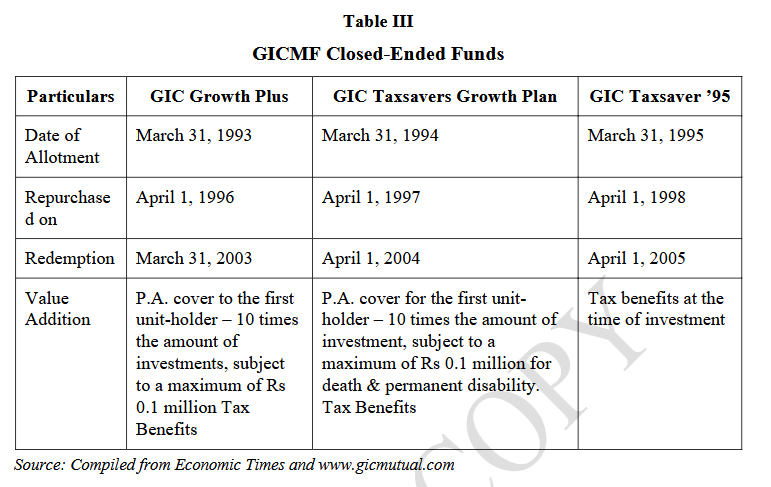
Set up in 1990, GIC Mutual Fund (GICMF) was sponsored by GIC and its four subsidiaries. It was formed as a Trust in accordance with the provisions of the Indian Trusts Act 18827. The trust had launched 15 domestic schemes. Some of its products included GIC Balanced Fund, D'MAT, Growth+Plus II, Fortune, GIC Liquid Fund, GIC Debt Fund, and GIC Gilt Fund (Refer Table II and Table III).
GIC Housing Finance
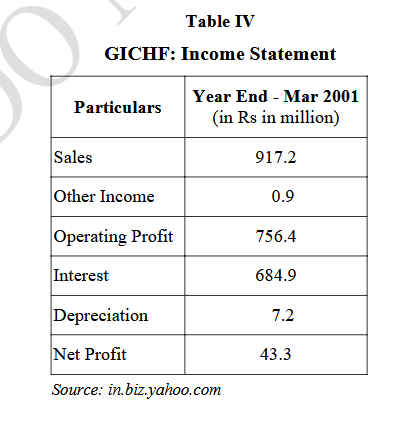
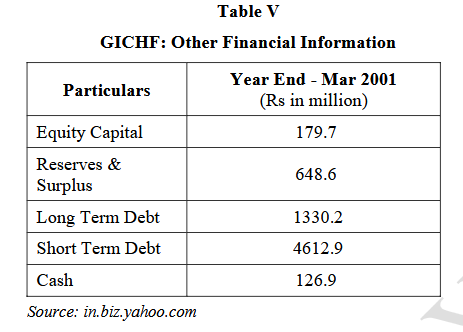
GIC Housing Finance (GICHF) was set up in 1989 as GIC Griha Vitta, jointly by GIC, GIC's subsidiaries, Unit Trust of India (UTI), Industrial Finance Corporation of India (IFCI) and State Bank of India (SBI). The company was involved in giving loans to individuals as well as to builders and developers for construction of houses or flats for residential purposes. Some of its popular schemes included GIC Apna Ghar Yojna (Our Home Scheme), NRI Housing loans, loans for corporate bodies under the Employee Housing Schemes, and Construction Finance Schemes. Up to 2001, GICHF operated through 10 branches in India and reported sales worth Rs 917.20 million (Refer Table IV and V).
THE POST-LIBERALIZATION YEARS
In 1999, the IRDA Bill was passed by the Parliament, and the insurance industry was opened for private players, with equity participation of foreign companies limited to 26%. By 2000, a number of private players entered the general insurance market through joint ventures with leading foreign players. This resulted in increased competition and GIC was forced to make several changes in its organizational structure and business strategies.
In January 2000, GIC took initiatives to deal with competition that had resulted from the deregulation of the insurance industry. The global consultancy firm PriceWaterhouse Coopers (PwC), and a chartered accountancy firm, MP Chitale, were appointed to restructure the GIC and its subsidiaries. The restructuring plan was focused on customer satisfaction, cost control, optimum utilization of manpower, and business growth. As a part of the move, GIC also planned to offer employee incentives if the pre-determined level of customer satisfaction was achieved. GIC also focused on new areas in health and crop insurance segments apart from return-linked
insurance products. It appointed management consultant KPMG Peat Marwick to conduct a survey to study whether the setting up a management service company (MSC) for health insurance would be worthwhile. The consultant was also responsible for managing the health care products and selection of third party administrators for coordination between the doctors, clinics, hospitals and medical shops.
Another important step in the restructuring plan was the company's entry into savings linked insurance product (SLIP) segment. The MSC was supposed to handle the marketing and processing of SLIPs. The new product offered medium-term cover for personal accidents and also returned an assured sum on its maturity.
In November 2000, the government made GIC the national reinsurer. As per this regulation, all the insurance companies in India, including the new private players, had to reinsure at least 20% of their business with GIC. Following this change, the aviation and crop insurance businesses of GIC were transferred to its subsidiaries. The Indian Airlines account was transferred to Oriental Insurance and the Air India account was transferred to New India Assurance. The government decided to set up a new company to handle the crop insurance business. The Agriculture Ministry was working out the guidelines for the new company that would take care of the crop insurance. After GIC became the national reinsurer, the Finance Ministry ordered the four subsidiaries to form an association and jointly deal with functions like personnel, investment and reinsurance. This lead to the formation of GIPSA. The formation of an association was recommended by Poddar Committee, which was set up to formulate a plan for coordination among the four subsidiaries of GIC.
RESTRUCTURING OF GIC
The management consultants appointed by GIC laid down four options for its organizational restructuring:
- Merge all the four companies or form two companies, with one exclusively conducting corporate business;
- Follow the Malhotra Committee recommendations by delinking the four subsidiaries from
- GIC, and give them operational independence;
- Allow equity crossholdings among the four subsidiaries; and Entrust one geographical region to each of the four outfits.
The government also planned to raise GIC's share capital from Rs 1.07 billion to Rs 2 billion, and also raised the capital base of each subsidiary to Rs 1 billion. It also wanted to divest 50% of the equity stakes of GIC and its subsidiaries to the public, including the employees of GIC and the subsidiaries.
In September 2001, GOI finalized the restructuring plan for GIC. Instead of merging all the subsidiaries, GOI decided to delink GIC and its subsidiaries. Originally, the management consultants had favored the merger of all the companies in view of increasing competition. However, the GOI felt that merger would take a long time to reap the desired benefits due to which the companies might lose their business. Therefore, GOI decided that the subsidiaries should operate as independent public sector insurance companies.
In November 2001, the Finance Ministry decided to introduce a Bill in the Parliament for restructuring the nationalized insurance company. The Bill proposed amendments in the General Insurance Business (Nationalization) Act, 1972, to delink GIC and its subsidiaries. In December 2001, the subsidiaries were delinked from GIC through a government notification. The Bill was formally passed by the Parliament in March 2002. Consequently, the four subsidiaries functioned as independent entities, which placed them in a level playing field with the private insurance companies. In June 2002, GIC proposed to transfer its equity stake in the four subsidiaries to the government at book value.
In June 2002, GIC also bought back its 40% stake in GIC Mutual Fund from the US-based Soros Chattarjee Management (SCM) at Re 1 per share. A top official of GIC said, “The Re 1 offered to SCM for the buyback was just a token amount.” While the total cost of SCM?s investment in GIC Mutual Fund was estimated at Rs 80 million, the buy back was priced at Rs 8 million.
PRODUCTS AND SERVICES
General insurance may be described as a way to reduce or eliminate risk of loss to property. The risks covered by general insurance included fire, the perils of the sea, death and accidents and burglary. Any risk arising from these may be insured against at a premium that commensurates with the risk involved. Thus, insurance is collective bearing of risk. GIC offered a variety of general insurance products (Refer Exhibit I).
General insurance was categorized as:
Fire Insurance
Fire insurance was designed to provide financial protection against loss or damage of property due to fire and other perils specified in the policy. It was offered for building or a flat; furniture fixtures and other contents, and loss of profit (consequential loss). GIC?s fire insurance policy was a comprehensive one, called Standard Fire and Special Perils Policy, which covered many risks apart from those pertaining to fire accidents. The policy covered loss due to lightning, aircraft damage, and losses due to terrorist attacks, earthquake, riots, strikes, malicious damage, floods and landslides. Fire insurance could be taken only by the owner of the premises to be insured. A tenant was not eligible to insure rented premises. However, the tenant had the option of insuring the contents of the premises. The premium was based on the value of property insured.
The rate of premium for fire insurance was categorized as non-hazardous and categories I, II and III. Non-hazardous goods had the lowest rate of premium, which is followed by category I, II and III type of goods.
Marine Insurance
Marine insurance included cargo and hull insurance. Cargo insurance offered coverage for loss or damage of goods in transit by rail, road, sea or air and articles sent by post; export and import shipments by ocean-going vessel of all types; and coastal shipments by inland vessels or country craft. Hull insurance covered ships including hull, machinery etc.
This policy covered the cargo in transit against marine perils. Marine perils, also known as perils of the sea, mean the perils consequent from, or incidental to the navigation of the sea or the perils of the seas, such as fire, war perils, troubles caused by pirates, rovers, thieves, jettisons, barratry and any other perils which are either of the like, kind or may be, designed by the policy.
Motor Insurance
Motor insurance was offered for different types of cars, trucks, two-wheelers, three-wheelers, motor rickshaws, taxis and buses. Two types of motor insurance – Third party and Comprehensive – were compulsory for all vehicles in India as per the Motor Vehicles Act 1988. The third party insurance insured only the party/parties other than the owner, in case of an accident. The comprehensive policy covered the owner as well as the third party involved.
The pricing of premium for motor vehicles depended on the value of the vehicle and the place where a vehicle was registered. For instance, in Mumbai, where claim rate was higher than other cities, the policy premium was higher. The pricing of premium for Heavy Commercial Vehicles (HCV) depended on the value of the vehicle and the gross laden weight10. In this category, the driver was insured along with the vehicle. A premium of Rs. 15 was charged for the driver. For all sorts of vehicles insured, the policy was not valid if the insured vehicle was given for hire, as a reward given to winners in vehicles racing, speed reliability trials and speed testing.
Personal Accident Insurance
Personal accident policy covered life of an individual in the case of an accident. This comprehensive policy comprehensively covered death, permanent disability and loss of limbs and eyesight. In addition, the policy also offered a stipulated amount to the policyholder depending upon principal amount that the policyholder was insured for, in case of his inability to live a normal life.
Health Insurance
Health insurance policies reimbursed expenses incurred due to of hospitalization/domiciliary hospitalization because of some illness/disease suffered or accidental injury during the term of the policy. There were also policies offered for periods of overseas travel and employment.
Liability Insurance
The 'Compulsory Public Liability' policy was designed under the public Liability Insurance Act, 1991, that imposed no-fault liability on the policyholder. The amount payable as relief was Rs 25,000 per person for a fatal accident, Rs 25,000 per person for permanent total disability, appropriate amount based on the percentage of disablement in case of permanent partial disability, and Rs 12,500 as medical expenses and Rs 6,000 for damage of property.
Engineering Insurance
Under the category, Contractors All Risks (CAR) Policy was offered, which was designed to protect the interests of civil engineering contractors, constructing building, bridges, tunnels and others. The policy covered losses caused by fire, lightening, explosion, flood inundation, windstorms (of any kind), earthquakes, landslides, theft and burglary, accidental damage, bad workmanship and other perils.
GIC also offered the Erection All Risks policy that insured the erection of electrical plants and machinery, equipment and structures that did not involve any civil engineering work, with the same coverage options as the CAR policy. Also called the Storage-cum-Erection policy, it covered third party liability too.
There were many other policies in the engineering insurance category including marine-cum-erection policy, machinery breakdown policy, boiler and pressure plant policy, machinery loss of profits policy, advance loss of profits policy, deterioration of stock policy, and electronic equipment policy.
Miscellaneous Insurance
This category of insurance included burglary, theft, workmen's compensation, fidelity guarantee, cancer, Comprehensive Package Policy for jewelry, television sets, Video Cassette Recorders (VCR), furniture, banker's blanket policies, blood stock (horse) insurance, pet dog insurance, sports insurance, special contingency policy, oil and energy risk insurance, satellite insurance, etc. Property insurance covered land, buildings and the contents of the building. Though there were several types of property insurance packages, property was usually insured against fire and burglary. Burglary insurance covered all losses caused by rising from burglary committed within a premise. However, a policyholder could claim insurance only if there was a 'forced entry' into the premises. In this case, too, the policy had no limitations and it was the prerogative of the insured to decide upon the value of the insurance cover.
Non-Traditional/Rural
The policies for rural areas included insurance covers for crops, water pumps for agriculture, huts, cattle and other livestock. In the kharif season of 1985, the central government introduced the Crop Insurance Scheme through the GIC. The scheme was offered in 15 states and two union territories. The premium and claims were shared by the central and state governments, the ratio of which was 2:1. The policies were sold through 11 Crop Insurance Cells at state capitals and union territories in GIC's territory. These cells liaisoned closely with the state governments and monitored the implementation of the scheme.
MARKETING
GIC did not seem to have formulated any concrete marketing strategies until the government of India had announced the liberalization of the Indian insurance industry. Since the company enjoyed a monopoly status in the market, it did not focus on marketing. Moreover, as some of the general insurance policies were mandatory, the company did not need to market them. GIC did not seem to focus on providing better service to the policyholders also.
In the pre-liberalization era, most of the agents and development officers were more interested in getting more customers and there were many complaints about poor customer service. The primary reason was that their incentives depended only on new business generated and not on customer satisfaction. However, after the liberalization of the insurance industry, competition in the sector intensified, forcing GIC and its subsidiaries to focus more on marketing initiatives and improving customer satisfaction.
The advertisements of GIC and its subsidiaries were governed by the IRDA Insurance Advertisements and Disclosure Regulations, 2000. As per the regulation, an insurance advertisement is any communication related to a policy that would intended to result in the sale of a policy or its solicitation by the public. It included all forms of printed and published materials, or any material using the print and/or electronic media. The companies could advertise through newspapers, magazines and sales talks; billboards, hoarding, panels; radio, television, website, e-mail, portals; representations by intermediaries; leaflets; descriptive literature/circular; sales aid
flyers; telephone solicitations; business cards; videos; and faxes.
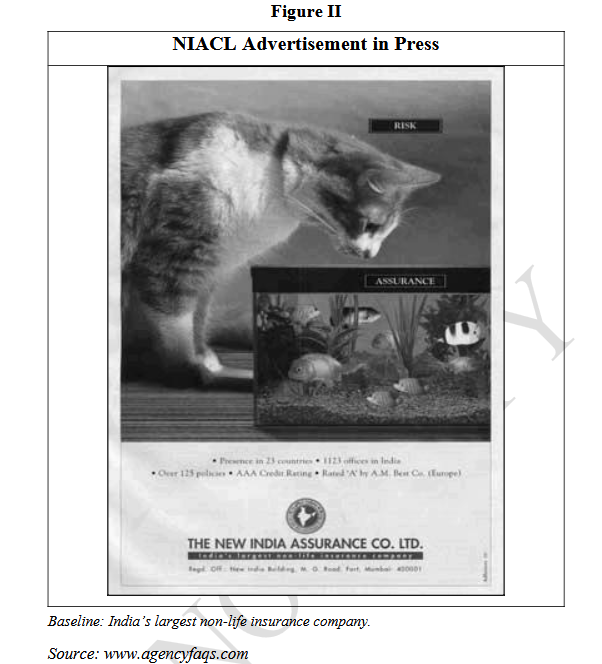
NIACL, the largest non-life insurer, was the first company to come up with advertising campaigns in the print (Refer Figure II) and other media. The company also introduced innovative insurance policies at frequent intervals, particularly for the weaker sections of the society. The company introduced these policies after analyzing people's requirements through carefully designed market surveys, and through prolonged discussions with marketing team, the Chamber of Commerce, all the state governments and also the customers. NIACL also took some steps to improve the quality of service. It installed touchscreen computers for easy accessibility of policy particulars, conducted market surveys to identify customer needs and also added services like risk management and risk inspection.
UIICL also took some major marketing initiatives with many private players entering the market. It allocated Rs 100 million for brand promotion. The company also planned an aggressive marketing drive for penetrating into the rural and personal line of insurance segments. V. Jagannathan, Chairman, UIIC, said, “The campaign is aimed at settling all non-suit claims instantly in any of our offices. The idea is to drive home the point that customer is the 'be al and et al' for us. However, claims which are disputed in the courts of law will not come under the purview of the campaign.”
In February 2002, in a move to further penetrate smaller towns and rural markets, UIICL announced plans to set up 'single-man' offices in semi-urban areas. It also announced plans to set up an 'agents grievance cell' to solve its agents? problems.
In August 2002, UIIC appointed five companies as Third Party Administrators (TPAs) for its Mediclaim policies. This enabled Mediclaim policyholders to avail the benefits of 'cashless' settlements in hospitals from September 1, 2002 onwards. Prior to the introduction of this facility, the policyholders had to settle their hospital bills first and claim it from the insurance company later. The five TPAs selected by the UIIC included Med Save Health Care of New Delhi, Family Health Plan promoted by the Apollo Group, Hyderabad, Medicare TPA Services (India) Pvt. Ltd of Collate, ICAN Health Services Pvt. Ltd, Pune and Paramount Health Services (Pvt) Ltd, Mumbai.
In July 2002, UIIC came up with an ad campaign on a hoarding. The hoarding read, “UI...the cover fielder in Lagaan. Our role in Aamir's hit film was to back it up with insurance.” UIIC had offered different types of covers at all stages of the production of the film like losses due to the death of artists, increase in artists? expenses due to the postponement of schedules, and losses caused by fire, etc. The company announced new types of covers in this line of insurance to deal with the increasing competition.
GIC also aimed at improving customer relationships by taking steps to quicken reinsurance acceptances and settlement of claims. It also concentrated on major customer centric parameters like promptness in issuing of documents and settlement of claims. It also entered into a collaboration with the Indian Institute of Technology, Guwahati, to re-orient and re-design its computerized network.
In October 2002, NICL announced its plans to enter into agreements with banks in order to sell its insurance products. It entered into an agreement with the Indian Overseas Bank and had talks with other commercial banks to sell personal line of insurance products. With a focussed marketing approach, the company expected to garner a premium income of Rs 27 billion in the next financial year. It launched a new personal line product called 'Sampoorna Surakshaa' (complete protection), including cover for personal accident, damage caused to residential building, personal damages, a modified Mediclaim, personal computer and a private car/motorized two-wheeler package and professional indemnity. It was initially aimed at employees in various state departments.
GLOBALIZATION
In December 1987, GIC, along with its subsidiaries set up a subsidiary in Singapore, known as India International Pte. Ltd. with a paid-up capital of S$25 million. It offered a wide range of insurance policies including those for motor, marine hull and cargo, personal accident, workmen's compensation, public liability, fire and miscellaneous accidents. India International became a leading insurance company in Singapore. During the same period, GIC also set up The New India Assurance Company (Sierra Leone) Limited and The New India Assurance Company (Trinidad & Tobage) Limited.
By 1999, the company participated in the paid up capital of nine more subsidiaries and associate companies floated in foreign countries. By 2001, GIC was operating in 14 countries through its subsidiaries and associate companies. As on March 2001, the investments of GIC and its subsidiaries' in the above mentioned wholly owned subsidiaries stood Rs 757.9 million. In addition, GIC operated in about 17 countries through its branches and/or agencies.
In early 2002, GIC as a part of its expansion drive, GIC set up branch offices in London and Moscow. In September 2002, it aimed at entering Africa, the SAARC countries, West Asia, the far East, Europe, Russia, Australia and New Zealand. It also planned to set up representative offices in the Middle East (Dubai), the South East (Singapore or Labuan) and East Africa (Nairobi).
To strengthen its global presence further, GIC sought GOI?s clearance for investing in foreign funds. It also planned to set up a reinsurance hub in collaboration with leading players in the Asian and African markets, to increase the reinsurance capacity of Asian and African companies. By doing so, the insurers expected to retain premiums within the continents instead of letting them pass to other reinsurers in Europe and America. GIC?s largest subsidiary NIACL operated in several other countries of the world in countries including Australia, Philippines, Malaysia, Singapore, Thailand, Japan, Hongkong, UAE, Oman, Kenya, Mauritius, Kuwait, Bahrain, Saudi Arabia, Ghana, Nigeria, Sierra Leone, Trinidad And Tobago, Netherlands Antilles and UK (Refer Exhibit II).
HUMAN RESOURCES
GIC's employees were grouped as Class I, II, III and IV. The officers were the Class I employees, development officers were the Class II employees, clerical and supervisory staff were the Class III employees, and subordinate staff were the Class IV employees. In 1997, a new wage revision policy was proposed and two new practices were introduced – 12% wage hike for all, and concept of Productivity Linked Lumpsum Incentive (PLLI). Prior to the implementation of this wage revision policy, the wages for the employees were revised in accordance with the wage revision for the banking industry. The new wage revision took place once in every five years. Wage revision took place last in 1997, and remained effective for the period August 1, 1997 to July 31, 2002. The basic pay scales were based on the All India Average Consumer Price Index (CPI)15. This wage revision was expected to cost Rs 1.42 billion for the GIC and its subsidiaries. The wage revision proposal was approved by the Union Government in 2000.
GIC, being a public sector company, analysts' felt that its officials were not free to take decisions and to function freely. The employee unions were also reported to be strong. Over-staffing was reportedly a major problem faced by GIC and its subsidiaries16. At the same time, there was a shortage of sufficiently qualified risk assessors. The lack of technically qualified assessors led to underwriting losses. It was also reported that entrusting responsibility to people was not done rationally with high and unrealistic targets set for obtaining business, which led to low accountability of employees.
With competition in the market increasing, the premium income of public insurance companies was expected to reduce by 30%. In addition, the companies could neither reduce the operational costs nor reduce the pay scales. Analysts felt that the only option that GIC had was to maintain profitability was to reduce the staff strength through voluntary retirement schemes (VRS). In November 2001, the GOI announced that about 14,000 development officers of GIC and its subsidiaries across the country might be retrenched, based on the recommendations of GIPSA. In NIAC alone, about 4000 development officers were to be retrenched. The company planned a
VRS, which was initially meant for Class II officers. The scheme was planned to be extended to Class III employees if it was successful with the Class II employees. Apart from retrenchment, GIPSA had also proposed organizational restructuring, consolidation of branches, revision of working hours, and recognition of trade unions.
GIC felt that Class II officers (Development officers) should be laid off, as their services were not needed in the liberalized insurance industry. Prior to privatization, these officers were responsible for increasing the companies? business by acting as intermediaries. The private insurance companies did not have any development officers. Instead, they were making use of insurance agents, who secured business for different insurance companies, and received commissions or brokerage in return. The public insurance companies decided to follow this course of private players. The agents were not entitled to regular/full time positions in any of the insurance
companies. They were contractual employees of these companies.
In February 2002, all the clerical unions of the general insurance companies rejected the proposal for the VRS. Commenting on the proposed VRS, M Karthikeyan, the General Secretary of the GIC Employees' Union said, “GIPSA's move is suicidal and repressive, and it disregards the long-term financial implications on the industry. In addition, excluding one segment of employees from the purview of the scheme is discriminatory.” He said that GIPSA should first plan to retrench the employees in the officers cadre as there was one officer for every four Class III employees. In September 2002, the All India Insurance Employees Association (AIIEA) demanded a 30%
wage hike for the Class III and IV employees in all the public general insurance companies. The AIIEA demand was prompted by the fact that 5 years had passed since the last pay revision in 1997. The association demanded that the pay should be hiked in accordance with the average CPI of 2328 points for the quarter-ended June 2002.
SOCIAL RESPONSIBILITY
The provision of social security was a responsibility of the State, as per the Schedule of the Constitution of India. The laws passed by the State to serve the purpose included the use of insurance – compulsory or voluntary – as a security tool. The Employees State Insurance was one such scheme, which took care of the expenses incurred due to sickness, disablement, maternity and death, for the benefit of industrial employees and their families. Insurers played an important role in the social security schemes sponsored by the GOI.
The Insurance Act, 1938, made it mandatory for insurance companies to offer a percentage of business to the people in the rural sector18. They had to offer insurance to workers in the unorganized sectors, economically backward classes of the society and other categories listed by the IRDA. To pursue the above rules, the IRDA, issued the 'Obligations of Insurance to Rural or Social Sectors Regulations 2000' in 2000. As per the regulation, the general insurance companies had to underwrite business in the rural sector of at least 2% of total gross premium in the first financial year, 3% of the gross premium in the second financial year and 5% of the gross premium in subsequent financial years. The regulation included insurance covers for crops.
All the rural insurance schemes operated on a commercial basis and were designed to offer social security to the rural population. GIC started special insurance schemes at subsidized premium rates to offer covers for livestock like cattle, sheep, goat and sub animals like silkworms and honeybees. It also offered covers for plantation and horticultural crops like rubber and grapes; property like agricultural pumpsets; poultry; and offered aquaculture insurance for shrimp/prawns. It also offered insurance for failed wells, salt works, cycle rickshaws, animal driven carts, etc.
GIC also offered the personal accident policy in rural areas with a premium of Rs 5 per policy. Known as the Gramin Personal Accident Policy, the sum insured was fixed at Rs 10,000 for death, loss of two eyes/two limbs and/or permanent total disablement. The sum insured was Rs 5000 for loss of one eye or one limb. GIC also offered insurance for dwelling huts that were constructed with financial aid from banks or cooperatives or government institutions. According to the hut insurance policy, a maximum of 200 huts situated in one contiguous were covered at a rate of Rs 3 per mille19. Packaged policies called Farmers? Package Insurance (Refer Exhibit III) and Tribal Package Insurance (Refer Exhibit IV) were also offered covering various risks.
Under the Insurance Act, GIC was also obliged to offer insurance to the social sector.20 However, GIC and its subsidiaries offered services without the statutory obligations, in collaboration with the government of India. In 1985, the GOI introduced the Personal Accident Social Security Scheme (PASS) for the benefit of poor families21. GIC and its subsidiaries were responsible for the regulation of the scheme. In 1988, the GOI introduced the Hut Insurance Scheme, meant to provide compensation to „very poor families in rural areas when the huts and/or belongings were damaged by fire. An amount of Rs 1000 would be paid for the hut and Rs 500 for the belongings. This scheme was also operated by the GIC.
In 1989, the government of India launched the Solatium Fund-1989, to provide compensation to the victims of hit and run23 motor accidents. The general insurance industry, and the central and state governments jointly contributed to the fund. The scheme required GIC to nominate offices of its subsidiaries in each district for settlement of claims within six months from the date of accident and it was also responsible for the functioning of these offices.
In June 1999, GIC launched the Rashtriya Krishi Bima Yojana (National Agricultural Insurance Scheme) to offer insurance coverage and financial support to farmers when the crops failed due to some natural calamity, pests or diseases. A 50% subsidy was given to small and marginal farmers. The financial burden of the subsidy was shared equally by the GOI and the states and/or union territories. In addition to supporting the government?s schemes, GIC also offered insurance policies with the objective of social security, like the Janata Personal Accident, Raga Rajeshwari Mahila Kalyan Yojna, Jan Arogya and Bhavishya Arogya.
FINANCE
In 2001, GIC and its subsidiaries reported a total loss of Rs 17.22 billion as compared to the losses of Rs 12.14 billion in 2000, and Rs 6.87 billion in 1999. The net premium from fire insurance business stood at Rs 21.50 billion compared to Rs 24.04 billion in 2000. The net premium from marine insurance business stood at Rs 8.28 billion as against Rs 8.46 billion in 2000. The motor insurance business reaped a total premium amounting to Rs 33.62 billion in 2001 and Rs 23.17 billion in 2000. The theft insurance business earned a premium amounting to Rs 6.88 billion in 2001 as against Rs 6.49 billion in 2000. Premium from other miscellaneous insurance
businesses stood at Rs. 38.62 billion in 2001, as compared to Rs 37.33 billion in 2000.
In 2001, GIC's profit from its fire, marine and theft insurance businesses of GIC stood at Rs 4.93 billion. However, the motor and other miscellaneous insurance operations of the company suffered a huge losses at Rs 22.15 billion. This resulted in the losses for all the insurance companies, as it happened in the previous two years. The companies also earned from the non-insurance businesses through interest, dividends and rents, which resulted in net profit for the companies (Refer Exhibit V and VI).
This huge loss was attributed to losses in third-party claims relating to motor insurance business and miscellaneous insurance business. The losses suffered by these businesses were attributed to the substantially low premiums collected, as compared to the claims paid out. In 2000-01, the total income from motor insurance stood at Rs 35.53 billion – Rs 33.62 billion of net premiums from motor insurance and Rs 1.91 billion of commission earned through its reinsurance business. In comparison, the total expenditure, including claims paid and other expenses, stood at Rs 52.39 billion. This resulted in a total loss of Rs 16.85 billion in the motor insurance business.
GIC's investments in foreign operations, as on March 31, 2001, amounted to Rs 757.9 million in the form of total paid-up capital in three wholly owned subsidiaries including Indian International Insurance Pte. Ltd. in Singapore, The New India Assurance Company (Sierra Leone) Limited and the New India Assurance Company (Trinidad and Tobago) Limited. In addition, GIC also operated in 17 other countries through 45 branches.
GIC had reported losses from its international operations for three consecutive years. In 1998-99, GIC reported a loss of Rs 618.2 million and Rs 452.25 million during 1999-2000. The loss increased sharply to Rs 1188.5 million during 2000-01.
The losses incurred by GIC in the insurance related business were counterbalanced by the income derived by GIC and its subsidiaries through investment. GIC derived Rs 22.78 billion in 1998-99, Rs 24.92 billion in 1999-2000, and Rs 26.96 billion in 2000-01. GIC also received dividends of Rs 650 million from three of its subsidiaries at the rate of 20-25%. GIC's investible funds24 had come down from Rs 23.22 billion in 1998-99 to Rs 28.43 billion in 1999-2000 and further down to Rs.18.43 billion in 2000-01. The decrease in investible funds was attributed to the reduction in fire insurance premium, increased claims payments, weak economic conditions, fall in interest rates and higher incidence of non-performing assets.
FUTURE OUTLOOK
Analysts felt that GIC?s future looked bleaker after the deregulation of the insurance industry in India. Competition was tougher in the general insurance segment, as compared to the life insurance segment. In life insurance, customers were locked in for life or at least for a minimum of 10 years. In general insurance, most of the policies were mandatory and had to be renewed annually. With the entry of private players and increasing competition, customers now had more choices and they had become highly price sensitive. They were not loyal to any specific company. Moreover, switching from one company to another did not involve any cost or inconvenience.
In addition, building trust was not considered very important in this segment. The general insurance policy was not devised as an investment vehicle and the risk covered was limited to the term of the policy. There were no long-term benefits involved in the policy. Therefore, private companies could attract customers mostly by offering lower premiums and some extra riders. Some analysts felt that GIC certainly was in an advantageous position, the most significant fact about it being its well-established extensive infrastructure across the country. Its distribution network was well-developed, resulting in lower distribution costs in a highly competitive industry. GIC was in the general insurance market for more than 25 years and seemed to have built strong relationships with its customers, which could be leveraged to maintain its sales. GIC's subsidiaries were familiar with the dynamics of competition. Though the subsidiaries were not competing on price, they were competing for customers and revenues. In addition, after the four subsidiaries expanded across the country irrespective of the regions they were established in, they started competing for market shares too.
Analysts felt that GIC would retain atleast 50% of the market during 2000-10. The public sector company would need to plan carefully to retain its penetration and expand its market. It might prove to be difficult for the new entrants to plan the entry strategies and market positioning to take away market share from the public sector companies.
In April 2002, GIC and other public insurance companies announced that they would form a pool to provide insurance cover to damages caused due to terrorist attacks. The pool was started with a fund of Rs 2 billion to which all insurance companies had contributed, the major contributor being GIC and four public insurance companies. GIC was responsible for the management of the pool.
As GIC was made the national reinsurer after GIC's restructuring, the company started focusing more on the reinsurance business. In July 2002, GIC planned to reinsure a part of high-value risk of celebrity insurance policies of LIC. LIC could underwrite risks for any life policy up to a limit of Rs 4 million. For any life policies higher than Rs 4 million, GIC planned to reinsure. Analysts said that, though this move of GIC may start on a moderate scale, the business might translate into a large one. For this purpose, GIC set up a life insurance department. Three middle level executives from LIC were appointed to develop the systems and procedures of the new
department.
In September 2002, GIC announced that it has chalked out a five-yr plan to achieve a net premium of about Rs 25 billion from the overseas markets. Currently, the company reported Rs 2 billion of net premium earned from overseas markets. The high expectation of overseas premium resulted from the terrorist attacks on the WTC in the US and exit of some of the major insurers from the reinsurance market like Royal and Sun Alliance, Copenhagen Re and Assicurazioni Generali. To earn a higher premium, GIC was targeting the markets of Africa, the SAARC countries, West Asia, the Far East, Europe, Russia, Australia and New Zealand. It also planned to set up
representative offices in the Middle East (Dubai) and South East Asia (Singapore or Labuan). As a part of the growth plan, GIC also aimed at forming marketing, technical and R&D divisions.
THE INDIAN GENERAL INSURANCE INDUSTRY
In the 1970s, the general insurance industry was nationalized in order to increase the penetration of insurance in the country and make it available to the lower segments of the society, particularly the rural population. However, even after 40 years of nationalization, only 25% of the insurable population was covered by insurance. This was one of major reasons that lead the GOI to liberate this sector, so that private players could work towards extending the reach and coverage of insurance across the country.
In the early 1990s, there was a major shift in the government's macro economic policy due to two developments – the end of the Cold War and collapse of Communism. The concept that market dynamics should be the decisive factor in economic matters was gaining wide acceptance. The government controlled price regimes were increasingly being perceived negatively, which resulted in liberalization of the government?s economic policies. Another major development was India's entry into the World Trade Organization (WTO),26 which resulted in increased foreign commitments of the country. This led to the opening up of sectors like telecom, insurance and
power for private participation.
The government's decision to allow private players to enter into the insurance market in India faced stiff opposition from both political parties and employees of state insurance companies. Finally, after prolonged debates and discussions, the insurance sector was liberalized in 1999, with the passing of Insurance Regulatory and Development Authority (IRDA) Bill. IRDA was the regulatory authority for the insurance sector in India (Refer Exhibit VII). It had the powers to grant licenses to foreign players to operate in India, and formulated operational rules and regulations for the functioning of insurance companies. It regulated the performance of the insurance companies and monitored strategies adopted by them.
According to IRDA guidelines, foreign players were permitted to enter India in partnership ventures with an equity stake restricted to 26%. In spite of the regulation, many foreign players entered into partnerships with Indian companies to start operations in India. According to IRDA regulations, banks were allowed to enter the insurance sector on the condition that their capital adequacy ratio should be around 9%. Many analysts felt that, due to this rule, none of the public sector banks, except SBI, could enter insurance sector.
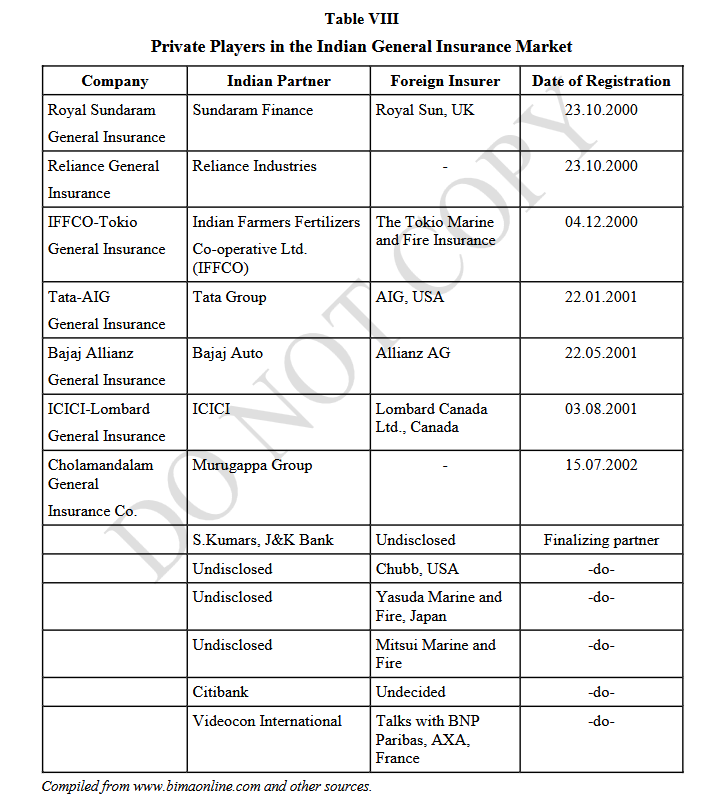
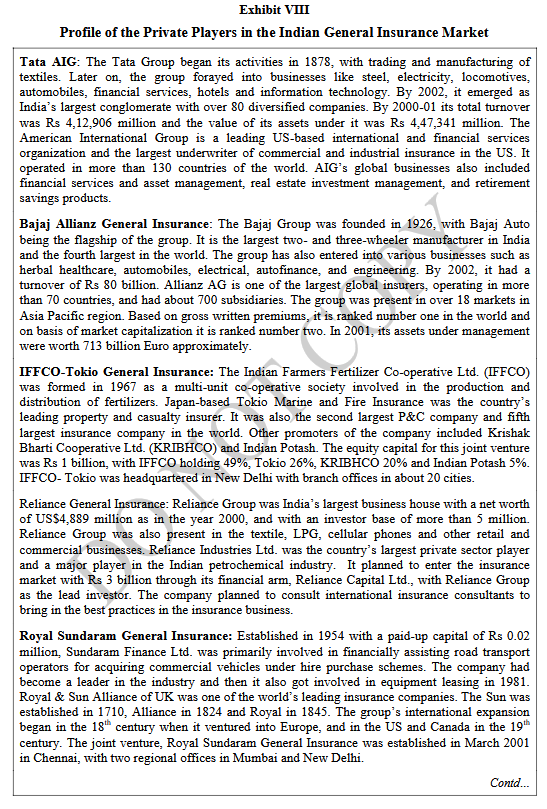
From early 2000 onwards, IRDA started granting licenses to the private players for offering general insurance services. Royal Sundaram, a joint venture of Sundaram Finance and Royal & Sun Alliance, was the first company to enter the liberalized Indian insurance industry. By July 2002, there were seven private players in the industry, most of them formed as joint ventures with foreign players (Refer Table VIII).
The general insurance industry had good track record in the public sector units. It reported consistent profit and offered dividends accompanied by a steady growth of its financial resources. The industry also contributed significantly to the country's economic growth of the nation by investing in the government sector and socially oriented sectors. The industry was also recognized as one of the largest financial institutions in the country. The mutual fund and housing finance ventures of GIC were also very successful.
Apart from this, GIC contributed to the maintenance of foreign exchange reserves through its reinsurance operations. The reinsurance arrangement was such that maximum retention was made possible and also protected policyholders' interests. The GIC's inwards reinsurance wing, called SWIFT, also contributed to the maintenance of foreign exchange reserve by acting as an international insurer that accepted risks from all over the world.
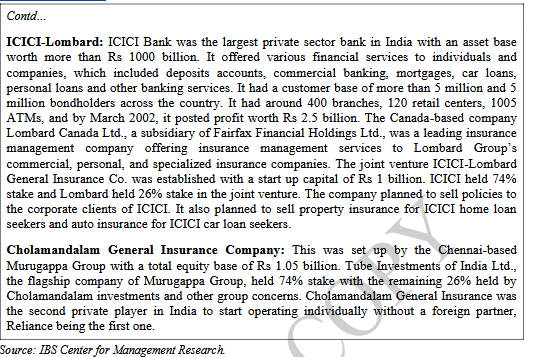
Till the early 21st century, GIC dominated in the Indian general insurance industry. The entry of private players (Refer Exhibit VIII for the profile) changed the scenario and several changes took place in the industry, such as increased focus on customers, introduction of innovative products and large-scale marketing initiatives. According to analysts, the new players were successful in creating their mind share through aggressive campaigns and promotional activities. Their focus on comprehensive training for agents led to their brand being communicated well to the customers. Analysts claimed that though advertising would play a major role in increasing insurance awareness and attracting customers, the most important factor for the Indian insurance industry's success would be distribution. Before liberalization, distribution was done entirely via individual agents. Due to the liberalization up of the industry, many changes took place in the distribution channel norms in India. The government granted permission for bancassurance27 and corporate agents in the industry. In addition, in August 2002, the government allowed insurance brokers to operate in India.
The objective of private players was to implement multi-channel strategies to expand their reach in the markets and to penetrate the rural markets too. According to IRDA regulations, new private players would have to show a minimum of 5% of their premium income from rural areas during the first year of starting their business.
The entry of private players, especially the international players was expected to speed up insurance mobilization in India. The competition that resulted from private players entering the industry was also expected to make the competitors come up with innovative schemes, which would enable consumers to save and insure. However, as the regulatory system in India was new, analysts expected that it would take some time for competition to build up. The deregulation of the industry was also expected to bring in more foreign direct investments (FDI) into India. In addition, the increase in the investment limit also resulted in an increase of the international players' interest to operate in India.
QUESTIONS FOR DISCUSSION
1. Briefly examine the evolution of general insurance in India. Explain the functioning of GIC and its subsidiaries before and after liberalization of the insurance industry in India.
2. What do you think are the factors responsible for GIC?s restructuring and its conversion into a national reinsurer? Briefly discuss the restructuring plan of GIC. Do you agree with the government's decision of delinking the four subsidiaries of GIC? Justify your stand.
3. GIC and the four public insurance companies were forced to focus on marketing after the liberalization of the insurance industry. What were the marketing strategies adopted by the various public general insurance companies? What other strategies do you suggest to these companies in order to compete successfully?
4. Post-restructuring, GIC adopted many strategies to garner a huge percentage of reinsurance premium in India as well as abroad. Comment on these strategies and suggest measures for the company to further increase its revenues.
5. After the deregulation of the insurance industry in India, many players entered the general insurance industry, which led to an increased competition. Perform a SWOT analysis for the four public insurance companies and suggest ways to sustain the increased competition.
EXHIBITS
Exhibit I
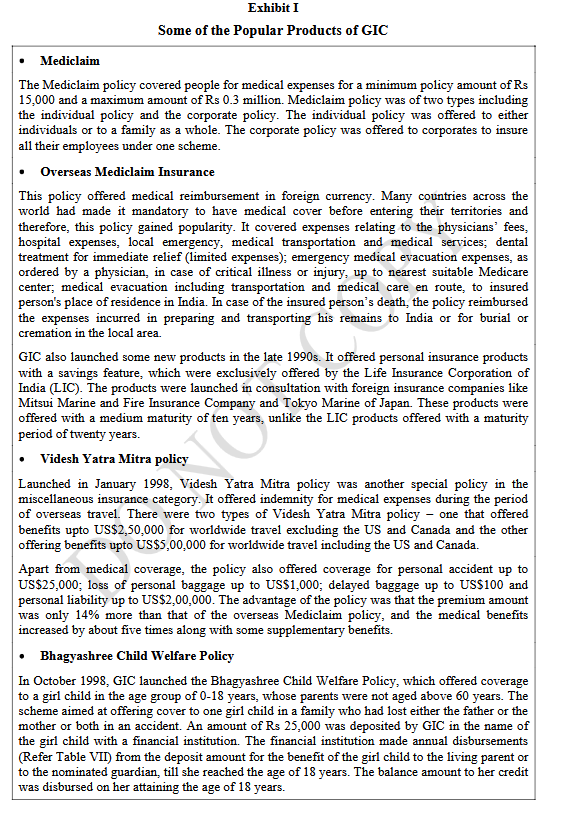
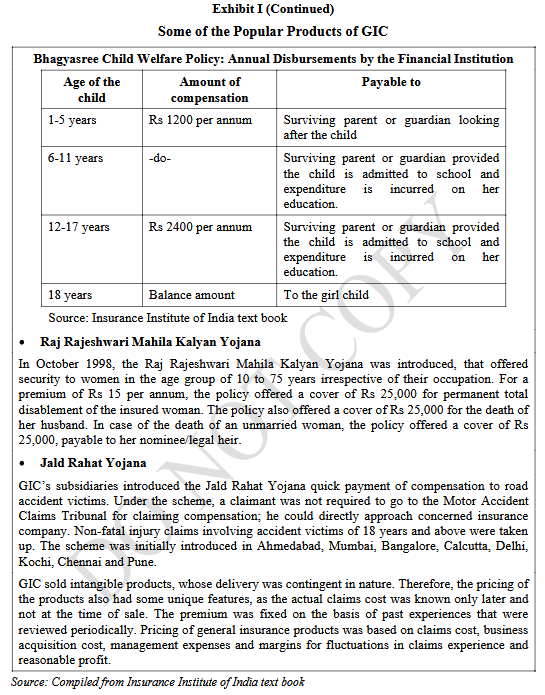
Exhibit II and Exhibit III
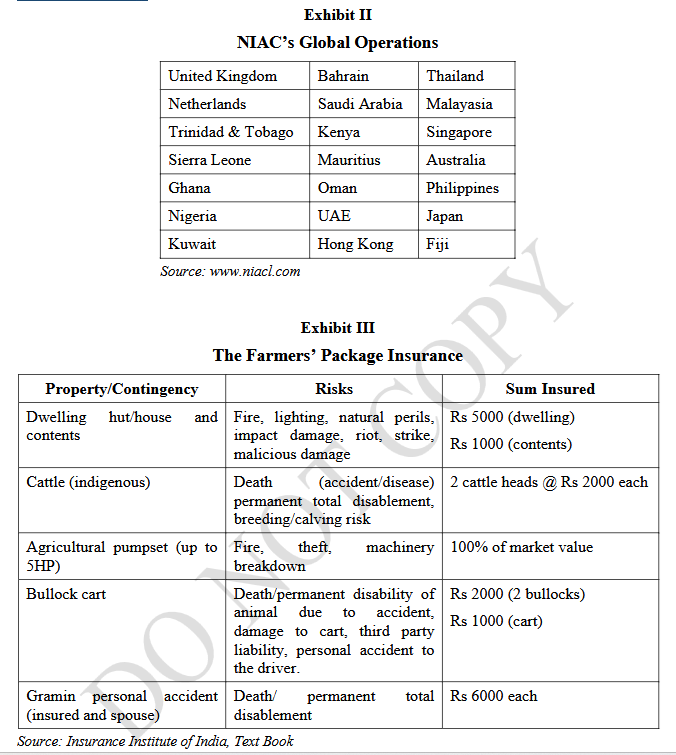
Exhibit IV
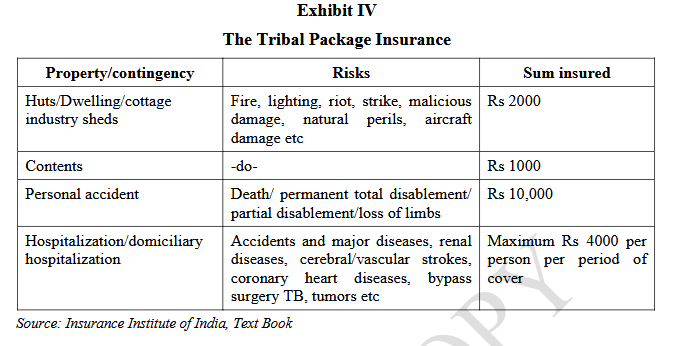
Exhibit V
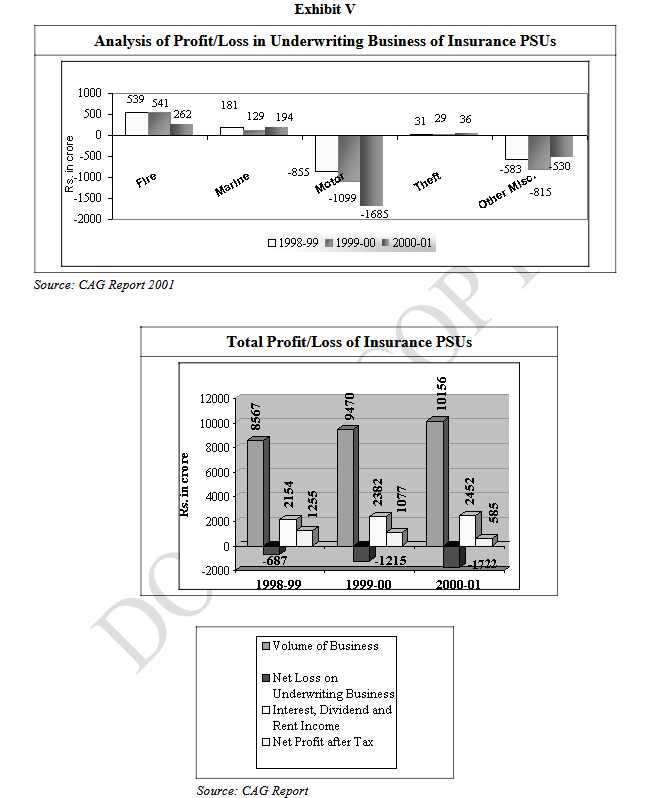
Exhibit VI
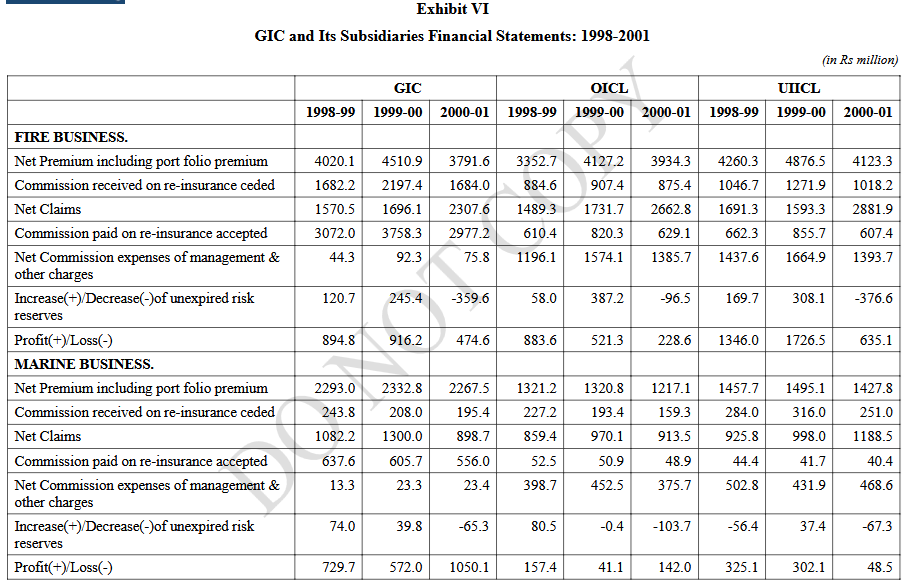
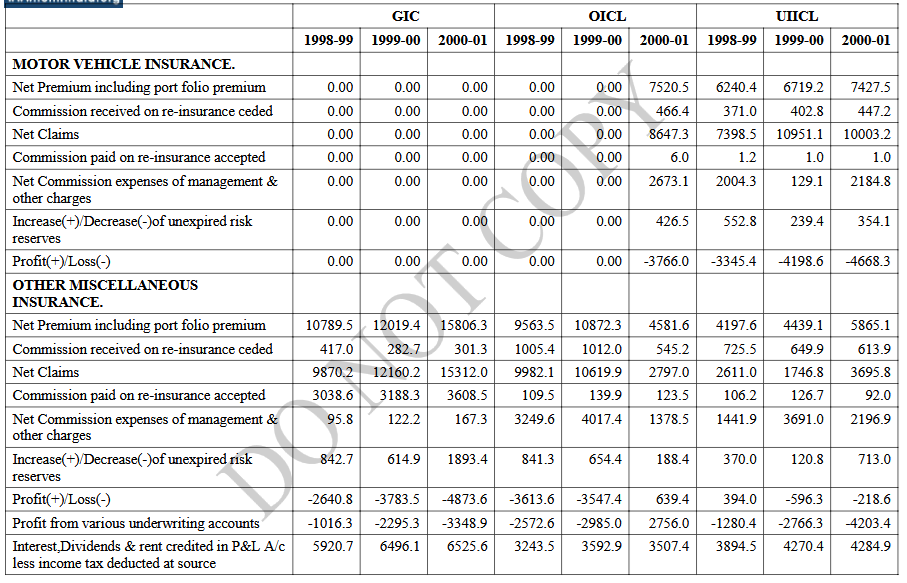
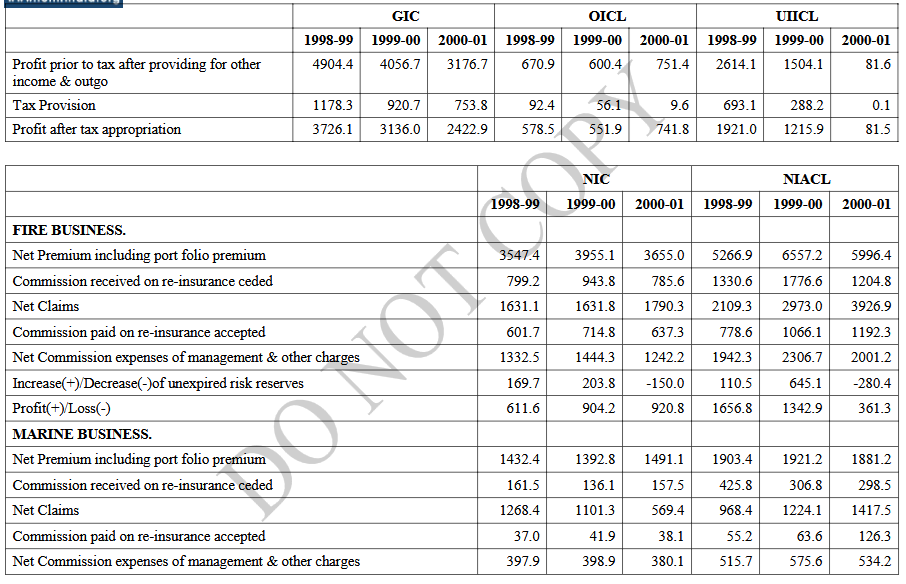
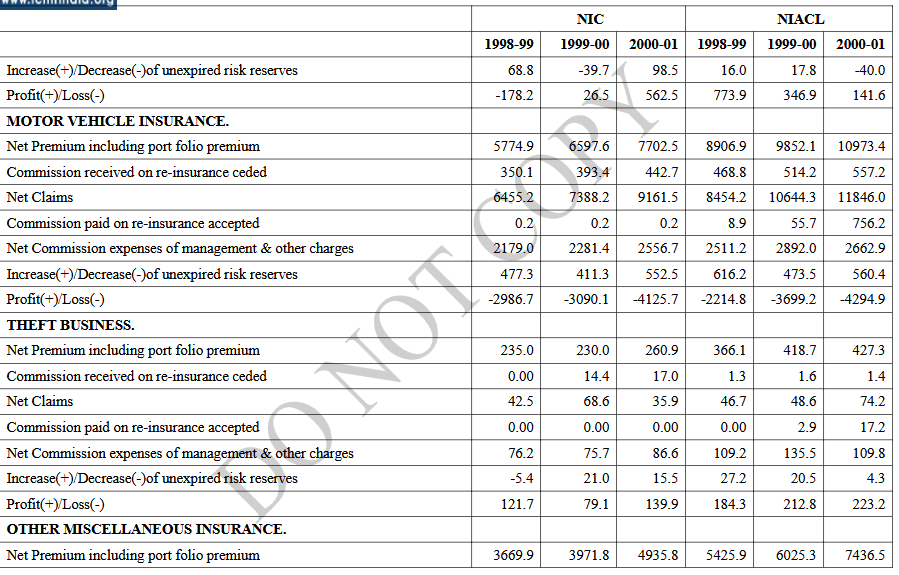
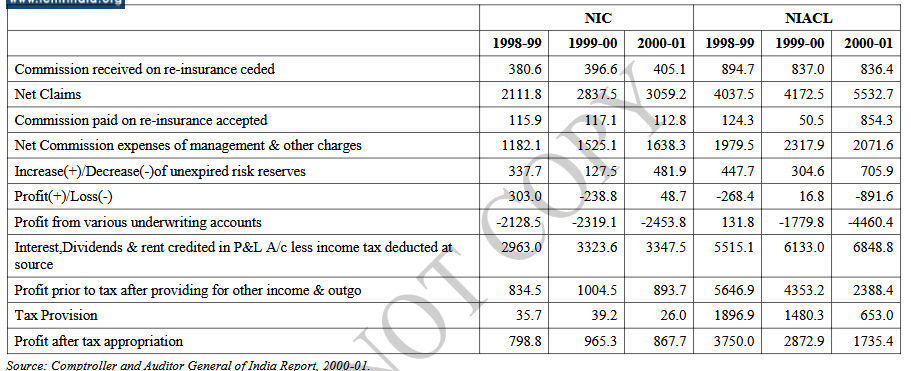
Exhibit VII
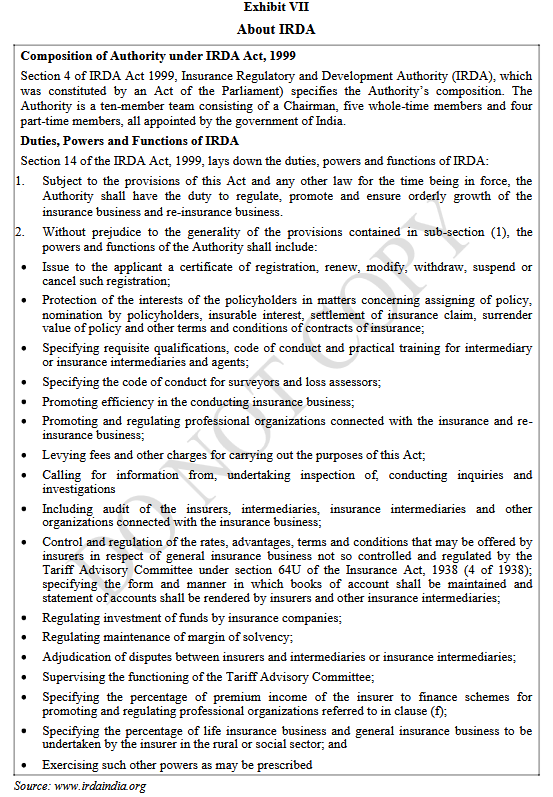
Exhibit VIII
Keywords
functional areas, General Insurance Corporation of India, state-owned general insurance, resources, finance, history, inception, product segments, fire, marine, theft, miscellaneous, subsidiaries, National Insurance Company Limited, New India Assurance Company Limited, Oriental Insurance Company Limited, and United India Insurance Company Limited, social responsibility initiatives, future prospects, liberalization, marketing strategies
Related Case Studies
| Case Title | Details |
|---|---|
|
Case Title Iridium: Making a ComebackCase Code: CLBS048 |
Details |
|
Case Title Evolution of InfosysCase Code: CLBS034 |
Details |
|
Case Title The Fall of Daewoo MotorsCase Code: CLBS030 |
Details |
|
Case Title Reinventing Cadbury (Caselet)Case Code: CLBS024 |
Details |
|
Case Title The Resurgence of Radio in IndiaCase Code: CLBS021 |
Details |