
Sun Life Financial Services
Details
BSTR112
32
2002
YES
500
Sun Life Financial Services
Insurance
Canada
Corporate Strategy
Abstract
The case provides a detailed insight into the strategies adopted by Canadian insurance major SunLife Financial Services in various areas. The case provides information about the company's history, its evolution and examines its marketing, finance and human resources strategies. Details about the various mergers and acquisitions undertaken by the company over the years are given. The case also provides an insight into the company's global operations and examines its performance in various geographical segments. Sun Life's merger with Clarica is explored in detail and the implications of the merger on the Canadian insurance market are studied. Finally, the case provides a detailed note on the global insurance market and on the Canadian insurance market.
Learning Objectives
The case is structured to achieve the following Learning Objectives:
- The operations of an insurance company.
Contents
Sun Life Financial Services
“Extremely strong consolidated capital, very strong business profile, and very strong operating performance. Partially offsetting these strengths are strong competitive pressures in most insurance markets in which Sun Life competes, and operating challenges associated with the insurer’s UK operations.”
- Standard & Poor, explaining its AA+ (Very strong) rating for Sun Life, in 2001.
INTRODUCTION
By 2001, with revenues of C$ 16.7 billion1, Sun Life Financial Services (Sun Life) had emerged as the largest insurer and leading financial services provider in Canada. Sun Life served institutional and individual customers through an extensive distribution sales force network, independent agents, investment dealers and financial planners. The company operated in the wealth management and protection businesses in more than 16 countries with over 11,800 employees. It had over 7 million customers in Canada alone. Sun Life‘s common stock was listed on the stock exchanges of Toronto, New York, London and Manila (Philippines).
Sun Life offered integrated financial services, in the areas of wealth management and protection. Wealth management included asset management, mutual funds, and pension plans; while protection included life insurance, general and health insurance. The company had formed strategic alliances with leading companies in countries across the globe, in addition to the many mergers and acquisitions it had undertaken. In 1999, the company announced its decision to exit the reinsurance2 business due to continuous losses incurred in the business. In the same year, the company‘s policyholders approved the company's move towards demutualisation.
In 2001, with a market capitalization of $ 9.6 billion, Sun Life was strongly established in all markets it was operating in. With the takeover of Clarica Life Insurance Company, Sun Life emerged as the sixth largest life insurer in North America in terms of market capitalization.
On March 31, 2002, the group had C$ 359.9 billion of assets under management of which the wealth management business accounted for C$ 320.3 billion – 90% of Sun Life‘s total assets. It was ranked 241 on the Forbes International 500 list in the Forbes 2002 survey.
New insurance laws were promulgated in Canada, allowing acquisitions in the insurance industry. This resulted in consolidation in the insurance industry with only a few strong players remaining in the market. Many Canadian companies had adopted the acquisitions route as the strategy for rapid expansion. Industry watchers commented that Sun Life might become an easy prey to its rival Manulife5, as the latter‘s stock market performance had been much better than that of Sun Life. They felt that to avoid a takeover bid from Manulife, Sun Life needed to integrate the operations of its acquired companies and look for fresh takeover targets in the US.
HISTORY
The history of Sun Life dates back to 1865, when a group of businessmen in Montreal met to discuss the possibility of starting a life insurance company. In 1871, the company was incorporated, and soon its agents were working in seven regions, from Halifax, Nova Scotia to Woodstock, Ontario.
Sun Life expanded its operations to overseas markets, very early on. In 1892, it entered Hong Kong, and in 1893 it started its operations in the United Kingdom (UK). In 1895, it entered United States (US) through Sun Life Assurance Company. The company operated in 49 states (all except for the state of New York), the District of Columbia and Puerto Rico. In the same year, it entered Philippines and West Indies. The company also moved into other areas of insurance. In 1919, Sun Life became the first Canadian company to issue group insurance, and by 1942, assets under its management touched the C$1 billion mark. Sun Life entered the health insurance business in 1956 and in the same year it was converted from a shareholders' ownership into a mutual company, owned by its policyholders.
In 1982, it acquired Massachusetts Financial Services Company (MFS) and entered the mutual funds business in the US. The following year, it entered into the unit trust business in the UK and expanded its operations. The growth of Sun Life as a financial conglomerate was attributed to its acquisitions, which gave it significant market shares. In 1986, Sun Life entered the mutual fund business in Canada through Spectrum Mutual Fund Services. By the early 1990s, the company reached the C$300 billion mark in life insurance, and assets under its management were around C$107 billion. In 1995, it opened a representative office in Beijing to explore the business
opportunities in the world‘s most populous country.
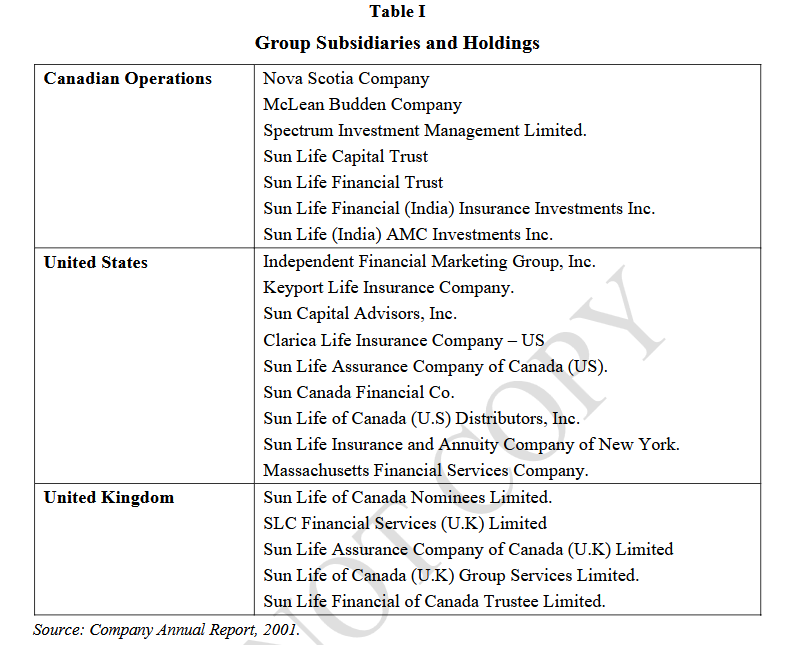
The company had a diversified product range which included financial services such as mutual funds, pension plans, annuities, and investment management services. It offered its services through different affiliates such as Sun Life Assurance Company of Canada, Sun Life Securities Inc. and Spectrum Investment Management Limited (Refer Table I for the subsidiaries of Sun Life). In 1998, it signed an MoU with a Hong Kong based financial services firm, China Everbright Group, and got a license to operate in China in 1999. In the same year, Sun Life entered the mutual fund business in India through a joint venture with the Aditya Birla group, one of India‘s largest
business conglomerates.
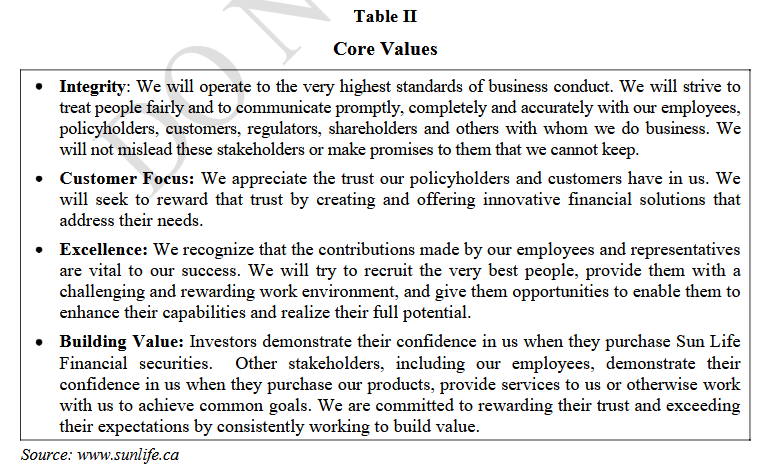
Sun Life stated its vision as 'To be a world-class provider of financial security to individuals over their lifetimes.' In order to realize this vision, the company identified the core values to which it was committed (Refer Table II).
By 1999, the assets under the company‘s management reached C$ 300 billion. In 2000, Sun Life's demutualisation process was completed and its shares started trading on stock exchanges in Toronto, New York, London and Manila (Philippines).
MERGERS AND ACQUISITIONS
Sun Life adopted mergers and acquisitions to expand in new markets and also to consolidate its position in markets where it already had a presence. In 1982, Sun Life acquired an 85% stake in the US-based Massachusetts Financial Services (MFS), which was an established player in the management and distribution of mutual funds and institutional funds. It was also a leading player in the variable annuity products6 management for other companies, including financial services companies. In 2001, MFS was ranked fourth in the mutual funds industry, on the basis of new flows generated in retail mutual funds. By the end of 2001, MFS was managing US$ 120 billion in assets for more than five million individual and institutional mutual fund and annuity investors worldwide. In the same year, MFS contributed $231 million, representing 14% of Sun Life's total earnings for the year.
In 1994, Sun Life UK acquired the London-based Sun Bank, a mortgage and savings bank. (Sun Bank was sold in 2001 to Portman Building Society based in London for £95 million.) In 1997, Sun Life acquired McLean Budden Limited (McLean Budden), one of the oldest Canadian investment-counselling firms operating from Toronto, Montreal, and Vancouver. It (McLean Budden) offered investment management services, and by the end of the 2001, had $24.8 billion in assets under its management.
In 1998, Sun Life's management set its sights on becoming a top ten player in North America and in the emerging markets of Asia. It planned to deliver strong internal growth across all its operations, and to acquire companies, which fitted into its larger plans for growth. The company also decided to exit the markets where it was unable to achieve its targets. The focus of its acquisitions was on achieving a leadership position in Canada and pursuing high growth segments in the US. The acquisition strategy was worked out on the basis of the following parameters:
- Discipline – Exiting or scaling back operations where the company had failed to achieve a critical mass or profitability.
- Strategic Fit – Fitting the overall strategy of becoming a top ten player in North America and the emerging Asian markets.
- Value accretion – The end result of the exercise would be enhanced value for the company.
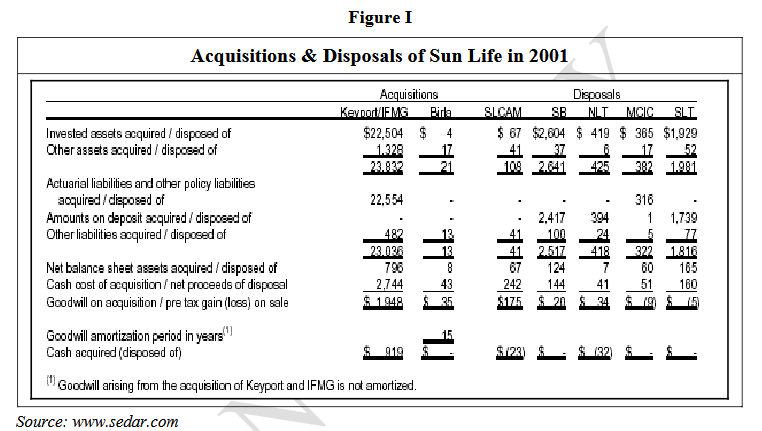
In accordance with the above criteria, Sun Life entered into an agreement with the Boston-based group of asset management companies, Liberty Financial Companies (Liberty) in May 2001. The agreement involved Sun Life‘s acquisition of two of Liberty‘s companies, Keyport Life Insurance Company (Keyport) and Independent Financial Marketing Group (IFMG), for US$1.7 billion (C$ 2.6 billion). Keyport‘s product profile included fixed and variable annuities, which complemented Sun Life's product profile and distribution capabilities. Keyport had around US$ 19.0 billion (C$29.5 billion) in assets under management and generated total annuity sales of US$ 2.7 billion (C$ 4.2 billion) in 2000. With the acquisition of Keyport, the combined business emerged as the tenth-largest company in the US variable annuity business. Sun Life also acquired New York based IFMG, a marketing group for annuities and mutual funds distributing wealth management products to small and mid-size banks. (IFMG was ranked first in fixed and variable annuities sales through banks in 1998 and 1999.)
According to Sun Life‘s management, the acquisitions of Keyport and IFMG would help the company achieve the goal of entering the 'Top 10' in targeted product markets in North America. It was added that Sun Life‘s strong presence in variable annuity franchise and Keyport's impressive fixed annuity business would result in a wealth-management powerhouse, which would cater to the full array of client needs. IFMG‘s extensive distribution network and positioning were expected to complement Sun Life‘s distribution system, whose strengths were its brokers and financial planners.
Sun Life financed the purchase through a combination of existing cash resources and money raised from the capital market. The merger was expected to raise the earnings per share (EPS) by 15-20 cents (CDN) in 2002. According to Sun Life, the acquisitions were in line with its business strategy and there existed a strong complementary fit between their operations. The company felt that the purchase of Keyport and IFMG would:
- Add scale to its operations in the US
- Provide a diversified product portfolio
- Strengthen Sun Life‘s product portfolio
- Enhance the distribution network
In December 2001, Sun Life and Clarica Life Insurance Company (Clarica) announced a decision to combine their operations. As per the agreement, Clarica was to become a wholly owned subsidiary of Sun Life but retain its name. With this acquisition, Sun Life:
Moved from the fifth position in the Canadian insurance industry, to become number one, with total revenues of $21.7 billion, assets under administration of $344 billion and total assets of $140.2 billion
- The leader in Canada‘s group life and health insurance markets
- The number one player in Canadian group retirement services
- The market leader in terms of retail insurance premiums in force in Canada
- Number one in terms of market capitalization of Canadian insurance companies
- The insurance company with the largest customer base of approximately 7 million Canadians
- One of the top five publicly traded North American life insurance companies, measured by market capitalization.
According to Sun Life sources, the cultural and business similarities between Clarica and Sun Life helped lower cost structures, increase revenue and expand distribution capabilities. The company also decided to amalgamate its two subsidiaries, Clarica Life Insurance Company and Sun Life Assurance Company of Canada, by December 2002. It was reported that the amalgamated company would operate under the 'Sun Life Assurance Company of Canada' name but would market products under both the Sun Life Financial and Clarica brands. It was expected that the deal would simplify business processes and operations, and operating costs would also be reduced. The Sun Life Financial brand was to be used in selected retail products and distribution channels, and in group retirement services and group insurance, as it had a strong presence in these areas. The Clarica brand would be used to serve individual retail customers through more than 4,000 direct sales personnel. Clarica and Sun Life Financial drew up plans to ensure smooth integration, and to maintain their shared focus on customer service excellence. In May 2002, the government of Canada granted approval to Sun Life‘s acquisition of Clarica. Sun Life claimed that pre-tax synergies would be around $97 million in 2002, $236 million in 2003 and in 2004 savings would reach around $270 million. Analysts pointed out that these savings would arise, as the integrated company would have a single management team, only one set of associated expenses, economies in operating units and in information technology. Though Sun Life expected to gain substantial
amounts as savings, its equity base increased by more than 40% because of the stock issued to Clarica shareholders. Analysts pointed out that Sun Life‘s investment performance would depend on uncertain gains from size and synergy and on the management team.
For the reasons stated above, stock markets reacted cautiously to the merger, and Sun Life‘s stock traded below the $33.6 price it commanded when the deal was announced. However, some analysts argued that the success of the Sun Life-Clarica deal was not dependent on stock price movements, and that the stock prices did not reflect adequately the excitement and positive views about the merger in the market. From the point of view of customers, some analysts felt that the ongoing trend of consolidation in the Canadian insurance industry would leave customers with very little choice, and their bargaining power would be reduced considerably.
Business Segments
Sun Life's business, spread across four geographic segments, Canada, the US, the UK and Asia, was divided into two principal business segments – 'Wealth Management' and 'Protection.'
Wealth Management
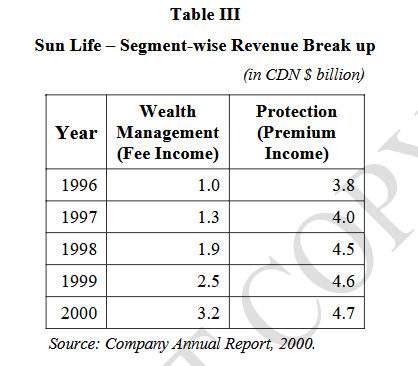
The wealth management business consisted of asset management, mutual fund, pension, and annuity & brokerage operations. Considered to be the =growth segment‘ of Sun Life, the wealth management segment managed assets worth C$315.2 billion in 2001 – 90% of the company's total assets under management. In the same year, wealth management represented around 55% of the total revenues earned by the company. During 1997-2001, it grew at a CAGR of 22% in assets under management and 24% in fee income. The revenues for the wealth management business came from:
- Investment advisory fees
- Distribution and servicing fees
- Mortality and expense fees: (Denotes the first fee imposed by an annuity for insurance
- guarantee, commissions, selling and administrative expenses of the contract.)
- Annuity premiums
- Net investment income on general fund assets, which were held in pension and fixed annuity business.
Protection:
Sun Life's protection business consisted of individual life, and group life and health insurance operations, contributing 45% of its total revenues in 2001. During 1997-2001, the segment grew at a CAGR of 7%. The revenues for the protection business came from:
- Premiums earned on individual life, group life and group health insurance contracts
- Net investment income on assets supporting actuarial liabilities in the protection business
PRODUCTS AND SERVICES
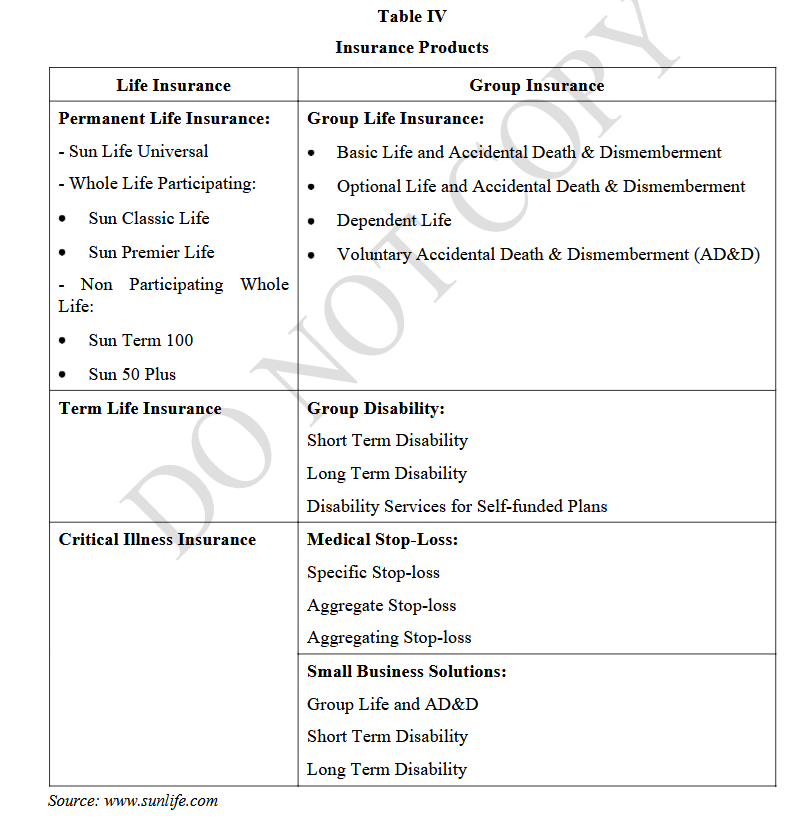
The products and services offered by the company under its wealth and protection businesses were divided into the following categories – Insurance Products, Investments, Savings & Loans, and Services (Refer Table IV for the insurance products)
INSURANCE PRODUCTS
In its life insurance plans, Sun Life offered various products, which targeted different segments of customers. The insurance products were broadly classified into the categories of Individual Insurance and Group Insurance (Refer Table IV for the product profile). Sun Life's individual life insurance business was divided into the following three categories:
- Permanent Life Insurance – life insurance
- Term Life Insurance – health insurance
- Critical Illness Insurance – disability insurance
Permanent Life Insurance:
Permanent Life Insurance products of the company offered safety for the whole life. Under this category, Sun Life offered a range of flexible permanent life insurance solutions, which provided tax-deferred savings and protection to customers. In this category, the company offered the following policies:
- Sun Universal Life: Sun Universal Life policy combined two features: savings and customized life protection, into one policy.
- Participating Whole Life: A policy for the whole life, which enabled customers to meet their long-term financial goals. In addition to ensured life protection, it allowed customers the alternatives of using policy dividends declared by the company to buy additional life insurance coverage, receiving the dividends in the form of a cash payment, or investing them with the company. Under participating whole life insurance policies, Sun Life offered two types of policies, Sun Classic Life and Sun Premier Life.
- Non-Participating Whole Life: This was a permanent life policy, in which non-participating policyholders did not receive any policy dividends but were provided guaranteed cash returns. Both permanent and temporary covers were made available under this policy. Sun Life offered two types of policies under this scheme, namely, Sun Term 100 and Sun 50 Plus.
Term Life Insurance:
Under Term Life Insurance, customers were offered policies for a fixed period of time with lower premiums. SunTerm offered a simple six-class system – three for non-smokers, one for cigar smokers, and two for smokers. Policy premiums were determined on the basis of the prospective customer‘s current health, medical history and lifestyle. Under SunTerm, the company offered 5, 10 and 20-year term plans and customers were given the option of renewing the policy for another term or converting it into a permanent life insurance policy.
Under term life insurance, Sun Life offered temporary policies as well. The term life insurance portfolio consisted of three non-participating plans covering short-term needs, such as mortgage or debt protection. Financial protection was offered in 5-, 10- and 20-year renewable terms. Another unique feature of the policies was that customers were allowed to change their term life policies into permanent life insurance policies without medical evidence, within a specified time limit. The term life policies also offered supplementary benefits such as accidental death benefit, total disability benefit and guaranteed insurability benefit.
Critical Illness Insurance
Sun Life's Sun LifeAssist policy was designed to provide protection to individuals, families or businesses in the event of a critical illness. Under this scheme, payment of benefit s not dependent on the inability to work or the severity of customer‘s condition – payment was made even if the customer recovered fully.
The company's group insurance business was also divided into various categories:
Group Life Insurance Products:
- Basic Life and Accidental Death & Dismemberment: This policy allowed employers to provide employees with accidental death benefits, equal to the employee‘s basic life insurance amount.
- Optional Life and Accidental Death & Dismemberment: This policy provided employees with an accidental death benefit, equal to their optional life insurance amount.
- Voluntary AD&D: This policy provided employees with a high level of financial protection in the event of death or qualifying injury.
Group Disability:
- Short Term Disability: This policy protected the insured person against financial loss resulting due to injury or illness over a limited period of time (usually 26 weeks or one year). During that period, the insurer (not the employer) paid the injured person‘s monthly income.
- Long Term Disability: This policy protected the insured against financial loss resulting from injury or illness, through monthly payments as long as the insured person remained disabled.
- Disability Services for Self-funded Plans: Sun Life provided disability management services to professionally manage the sick leave plans of employers with SunAdvisor disability management services. Through SunAdvisor, employers were allowed to select the type of help needed without paying for unwanted services. Sun Life offered four Sun Advisor modules with different suites of services. The services ranged from enabling employers to manage sick leave plans to complete claim management, including claim reviews, benefit checks, and monthly data reporting.
Medical Stop Loss
Medical Stop Loss was defined as insurance purchased by employers who self-insured their medical plans in order to protect themselves against unexpected losses. Under its Medical Stop Loss, Sun Life provided the following policies:
- Specific Stop Loss: This policy provided coverage to employers on large medical claims from a single employee. Coverage was based on the employer‘s medical coverage plan.
- Aggregate Stop Loss: This policy protected employers from higher-than-expected medical insurance coverage plan utilization.
- Aggregating Specific Stop Loss: This policy provided employers a chance to reduce their insurance premiums if they assumed more risk
Small Business Solutions
Under this category, Sun Life provided special packages within the financial constraints of small businesses, through its Group and AD&D, Short-term disability and Long-term disability policies. By 2001, Sun Life's group insurance business unit emerged as one of the largest group insurers in Canada. Its earnings from group insurance increased by 19%, largely due to the strong sales of group insurance products and improved operating efficiency. Revenues from group insurance for the year increased by 5% to C$1.5 billion and premium income and administrative services increased by 15% to C$2.3 billion. In the life insurance business, the company promoted universal life products, which offered opportunities for growth in the individual life market, more strongly. In 2001, the universal life products represented more than 75% of the company's Canadian individual life insurance sales.
INVESTMENTS
Along with its insurance products, Sun Life also offered investment services to its customers. The products and services under investment services were:
- Mutual funds – The Company offered various kinds of accounts through which customers could invest in mutual funds.
- Segregated funds –These funds ensured that an individual‘s investment was secure, no matter how the market performed. The investor was guaranteed to receive 75% of the initial investment.
- Annuities – These provided a guaranteed interest rate while protecting the savings. Sun Life offered various kinds of annuity plans such as Superflex, Non-redeemable Guaranteed Investment Account, and Income master.
SAVINGS AND LOANS
Along with its insurance products, Sun Life also offered investment services to its customers. The products and services under investment services were:
- Mutual funds – The Company offered various kinds of accounts through which customers could invest in mutual funds.
- Segregated funds –These funds ensured that an individual‘s investment was secure, no matter how the market performed. The investor was guaranteed to receive 75% of the initial investment.
- Annuities – These provided a guaranteed interest rate while protecting the savings. Sun Life offered various kinds of annuity plans such as Superflex, Non-redeemable Guaranteed Investment Account, and Income master.
SAVINGS AND LOANS
Sun Life also offered savings and loan products at competitive rates. It offered the following savings and loan products to customers:
- Premium Savings Account
- Premium Line Personal Line of Credit
- Residential Mortgage Service Program
SERVICES
Sun Life offered its customers Brokerage and Advisory services as well. wherein company-appointed advisor who helped customers choose from its products and services by providing information and helping select the right kind of instruments.
MARKETING
Sun Life believed in 'always working with the customers‘ perspective in the mind.' From the time it was set up, the company catered to the needs of customers by creating innovative products and services. It was one of the first insurance companies to issue unconditional polices. Over the decades, Sun Life devised many innovative policies, which helped it gain a competitive advantage in the insurance market the world over. Many insurance companies charged extra premium from military personnel, as the risk involved for their lives was higher. Sun life eliminated this extra charge for military personnel. Similarly, many companies charged extra premium from people travelling to Europe – on account of the sea travel involved. Sun Life eliminated this extra charge as well. As a result of such initiatives, the company was able to gain a substantial amount of business. Over the years, Sun Life continued to focus on marketing to expand the reach of its business.
In 1995 the company undertook a major exercise in restructuring. It redefined the roles and responsibilities of the management and support staff in its customer service division, and assigned functional managers the role of 'coaches.' The role of these coaches was to help the teams develop superior customer service skills. In the new set-up, the customer service division was divided into five groups. Each of these groups had its own set of roles and responsibilities:
- Process owners set overall performance targets and objectives, and were ultimately responsible for performance.
- Process teams managed day-to-day work and were accountable to the process owners.
- Coaches guided teams to high performance – they were accountable to the teams and were responsible for ensuring the quality of team projects.
- Product managers contributed technical expertise on product standards to the teams; their responsibilities were similar to those of coaches.
- Central support ensured maintenance and development of functional expertise, and supported systems development and implementation.
These measures helped Sun Life reduce the cycle time taken for key services by over 75% and on-time process performance increased by 25%. To reach out to a larger number of customers, Sun Life started selling policies through private banks and trust companies.
To boost the sales of its fixed and variable annuity products, Sun Life offered broker incentive programs by creating a 'Laureate Circle' on its website that gave recognition to the top salesperson. When a representative or broker reached a certain sales level, he was given access to dedicated group of customer service staff, a toll-free number to contact them and quarterly conference calls with fund managers and attorneys. The company targeted two groups: affluent clients were offered insurance products that covered the taxes charged when an estate passed to a beneficiary; and businesses were offered succession insurance, providing money to hire a
replacement for an executive who had died, and continuation insurance, which allowed surviving partners to buy out the deceased partner's share of the company.
In 1998, the company conducted a market research exercise to find out how to market its various new products in the best possible manner. According to the findings of this research, there was a need to educate customers on the different types of products available. The company then started providing customers educational materials in form of 'client-friendly' literature and prospectuses. It also expanded its sales force to sell new products throughout the year.
In 2001, Sun Life entered into a distribution alliance with the Canada-based financial services company, IPC Financial Network Inc. (IPC). The arrangement allowed IPC's clients to gain access to selected co-branded financial products and services such as chequing/savings accounts and personal lines of credit, supported by call center and debit card services. In the same year, Sun Life entered into an agreement with the Canada-based Berkshire Investment Group Inc., and launched Berkshire Premium Program. According to the agreement, financial advisors in the Berkshire Investment Group solicited applications for various Sun Life products.
In order to extend its reach, the company entered into a strategic marketing and distribution alliance with Hub Financial Inc9, in June 2002. According to the agreement, Hub Financial provided IQON advisors10 with sales and support services. They were also given access to multiple carriers for third-party life, health and disability insurance and segregated fund products. Hub Financial was also made a preferred distributor of Sun Life‘s insurance products. According to the agreement, the advisors were given integrated compensation systems which included wealth and insurance products offered by Sun Life. This agreement also allowed the advisors to access Hub Financial‘s top-of-the-industry web-based technology and tools, allowing them to track industry developments in financial, taxation and estate planning. According to analysts, this marketing agreement was expected to help ensure that Sun Life‘s customers received outstanding service.
GLOBALIZATION
Sun Life‘s international growth began in the early 1890s, with the company expanding into the Asia-Pacific region, the United States, the United Kingdom and Latin America. By the 1930s, Sun Life was operating in nearly 60 countries – however, due to political instability, currency devaluation and war, the company was forced to withdraw its operations from most of these countries. In 2001, Sun Life had operations in over 17 countries and derived around 77% of its total revenues from its global operations. United States was the largest source of revenues, contributing around 47% of total revenues.
United Kingdom
In 1893, Sun Life started operating in the United Kingdom, offering insurance products. Initially, it offered individual life insurance policies to consumers. For several years, it catered to the individual life insurance market only, expanding its operations to group insurance as well, in 1978. Its wealth management business in the UK consisted of unit trusts, unit-linked pension products, pension fund management services and banking operations. (When did it begin wealth management in the UK?) The company operated through various subsidiaries, which included Sun Life of Canada Unit Managers Limited which managed unit trusts, and SLC Asset Management which managed the company's UK assets, excluding those of Sun Bank and assets of third parties. Its protection business offered individual insurance (participating and non-participating whole life and term insurance), unit-linked life insurance products in which contract-holders could actively engage in the investment funds, as well as group life and health insurance.
In 1994, Sun Life acquired Confederation Life Insurance Company Ltd. (UK), which had a strong presence in the pensions business. But the business reported losses due to costs associated with the minimum annuity rates on its pensions and on (the compensation costs for earlier pension sales- meaning not clear), which were higher than preliminary estimates. In order to minimize losses, Sun Life initiated a cost-reduction exercise.
In 1998, Sun Life‘s wealth management business (UK) reported a net operating loss of $ 521 million, which was attributed to the cost of annuity rate provisions. In 1999, Sun Life (UK) reported a net operating loss of $332 million attributed to pension sales provisions.
In 2001, Sun Life (UK) reported total revenues of $2,067 million of which the wealth management business contributed $789 million as against $855 million in 2000. The decrease was attributed to Sun Life‘s decision to scale down its operations in the country. Individual life business contributed $850 million in 2001 as compared to $987 million in 2000 (Refer Table V for the revenues of UK operations). Sun Life abandoned distribution through direct sales personnel, and also stopped selling its individual life insurance and pension products to new customers in the UK, in 2001.
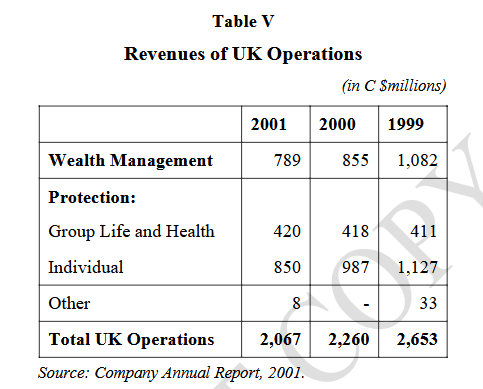
Other income included investment income, asset provisions and expenses that were not directly associated with UK operations. As on December 31, 2001, these operations reported $95 million in losses compared to $50 million in 2000. Increase in losses was attributed to restructuring expenses due to the rationalization initiative.
By December 31, 2001, Sun Life‘s UK operations contributed revenues of $180 million to—a rise of $61 million or 51% over that in 2000. In February 2001, Sun Life initiated measures to rationalize its business profile as it felt that its existing business model had failed to meet its long-term strategic business goals.
United States
Sun Life started its operations in United States in 1895. Its insurance operations concentrated on individual annuity products and high-end individual insurance markets. The business was organized into two areas: 1) individual life (fixed and variable universal life), term life, non- participating and participating whole life insurance; and 2) group life and health insurance (short and long-term disability benefits and medical stop-loss plans). Sun Life‘s group insurance business was focused on small and medium-sized companies.
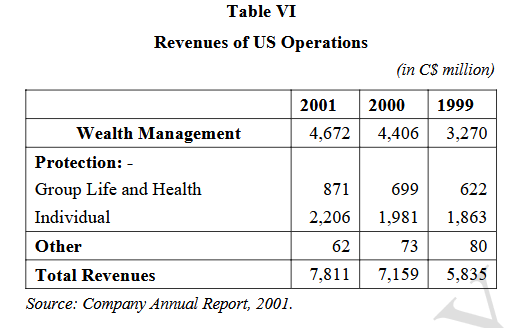
For the year ended December 31, 2001, US operations reported revenues of C$7.8 billion as compared revenues of C$7.1 billion in 2000. Though Sun Life saw decreased sales in the annuity business (due to the economic slowdown and the poor performance of the equity markets in the US), increased revenues from the protection business and Keyport were cited as reasons for the increase in overall revenues. ROE decreased to 11.8% from 20.1% in 2000, which reflected the increased equity base due to the acquisition of Keyport and IFMG. By 2001, US operations represented 25% of Sun Life‘s earnings and 47% of total revenues. In a survey of 34 mid-size
variable annuity providers in the US, Sun Life was ranked 'number one' for overall marketing support in 2001 (Refer Table VI for the revenues of US operations).
Asian Operations
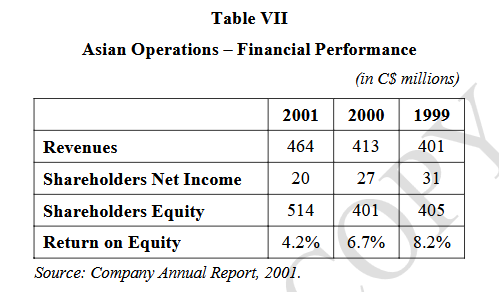
Sun Life's Asian operations included individual insurance businesses in Philippines, Hong Kong, Indonesia, and India, and group insurance business in Philippines and India. Wealth management was included in the Indian and Philippine operations. Revenues from Sun Life‘s Asian operations increased by C$51 million in 2000 to C$464 million in 2001 (a 12% rise) due to increased sales in Hong Kong and improved investment performance. However, ROE for 2001 decreased to 4.2% from 6.7% in 2000 due to reduced earnings and increased investments in the region. In 2001, the company expanded its presence in selected Asian markets.
In the Philippines, the company was the number two player in the individual life insurance business. It strengthened its market position continually by expanding its product range and providing enhanced customer service. Sun Life‘s Philippine operations contributed around 55% of its total insurance premiums revenues in Asia, and in 2001, it posted a growth of 14% in total premium, measured in local currency.
In Hong Kong, Sun Life adopted aggressive marketing strategies, focusing on investment-linked life insurance products through a multi-channel distribution network. In 2001, the company launched its variable life insurance business line, and entered into a bancassurance11 partnership with Hong Kong-based CITIC Ka Wah Bank to sell its products. It targeted high-end customers with strong customer services. The bancassurance channel accounted for 18% of its total sales in Hong Kong in 2001. In 2001, Sun Life‘s sales in Hong Kong increased by 38% and it also focused on strengthening its distribution network. In the same year, the company‘s agents increased in number to 346, from 271 in 2000.
Sun Life entered India in 1999, through a joint venture called Birla Sun Life, with one of the largest business conglomerates of India – the Aditya Birla group. Initially the joint venture operated in the mutual fund business in India through its asset management joint venture, Birla Sun Life Asset Management Company Limited (BSLAMC). BSLAMC was ranked as India's second largest private mutual fund. In December 2001, it had $1.3 billion in assets under management and approximately 350,000 investor accounts. After the Indian insurance sector was opened to private players, Sun Life started insurance operations through its joint venture with the
Aditya Birla group – Birla Sun Life Insurance Company Limited (BSLIC) -- in March 2001. It started operating in both individual life and group insurance. . By December 2001, the company had built a distribution network of 11 branches in 10 cities and had sold more than 8,000 policies. It entered into two bancassurance alliances as well, to strengthen its distribution network.
Sun Life‘s joint venture in China, Sun Life Everbright Life Insurance Company Limited (SLEB) was granted a license to commence operations in Tianjin, a major city in China. SLEB was the first foreign life insurance joint venture in China to start operations in Tianjin.
Sun Life sources reveal that the company's decision to concentrate on the Indian and Chinese markets was prompted by the relaxing of the regulatory framework in both countries, where, for the first time, foreign investment is being allowed in the insurance sector. According to Sun Life, both the countries offer tremendous potential, being the world‘s most populous countries with very low insurance penetration rates by global standards (Refer Table VII for the revenues of Asian operations).
HUMAN RESOURCES
Sun Life focused on employee development and offered a comprehensive package of benefits to ensure that its employees were happy to work for the organization. The culture of the organization was people-focused. The company wished to develop a set of shared values, which would serve as a guide for all employees. Sun Life encouraged employees to 'deliver excellence, make a difference, anticipate the future, be open-minded and act with integrity', as was stated in its business code for its employees. To fulfil its role as a socially responsible corporate entity, Sun Life encouraged its employees to support a variety of non-profit organizations and to participate in charitable activities.
Sun Life tried to provide a work environment, which allowed its employees to grow and develop in various ways. Every year, senior managers interacted directly with the staff, so as to gain an insight into the actual work environment. At Sun Life, communication was given vital importance as the managed believed that good internal communication practices helped initiate ideas and enabled the company to seize new opportunities. The company believed in encouraging its employees to be proactive.
Sun Life considered communication skills an important element in the wider competence of individual employees. The set of competencies required and the communications profile for each job were laid down. These were used for the appraisal of personnel for particular jobs, and were also used to determine their salaries. If an employee was in a customer-service job, then pay was directly linked with the individual‘s communication skills, and a certain level of competence in communication was a definite prerequisite for moving up in the salary scale. In support areas, the link was not direct, but the communication skills of the employee had a bearing on pay hikes.
The company followed an open policy regarding annual appraisals and used the 360º appraisal tool for its employees. In this appraisal technique, views were sought from the individual‘s peers, bosses, customers, people reporting to them and the individual being assessed. In addition to the annual appraisal, there were general quarterly appraisals.
In order to enhance employee productivity and development, the company initiated many programs. Some of the programs undertaken by the company were:
- The Galaxy Program: The company organized six seminars every year, in which well-known external speakers participated. The aim of the program was to expand the knowledge of the employees attending the seminar. Initially, the sessions were targeted solely at managers; later on they were opened to any employee who was interested in attending. To improve the communication skills of employees, the speakers had question-and-answer sessions with senior managers on the issue addressed at the seminar.
- Inter-lunch Meetings: Sun Life organized Inter-lunch meetings during which the top management team met employees from all levels and areas of business over lunch. About 15-30 employees attended each meeting with one or two managers. Each manager aimed to conduct six such meetings a year. This gave the senior management a chance to talk directly to employees and to learn their views on various policies of the company. These meetings usually started with a short presentation from the manager on a specific topic, followed by a general discussion, which gave employees a chance to ask questions or express views on the subject.
- Branch Visits: Senior managers visited branches to converse directly with employees and also to oversee the functioning of the branches.
- Managers’ Conferences: Held every 18 months, these conferences were attended by top-rung managers to review broad business strategies. At these meetings, the company focused on issues such as the company‘s vision and the role of managers in driving the company forward. They also discussed and tried to envisage different scenarios for the future.
In order to increase the productivity of employees, Sun Life provided many benefits, covering the personal, professional and health concerns of its employees (Refer Exhibit I for some of these benefits). In addition, Sun Life provided employees following benefits:
- Incentive Compensation: Sun Life gave cash bonuses in addition to the regular salary if an employee met team and individual objectives that were set at the beginning of the year.
- Vacation: New employees of Sun Life earned 15 days of vacation per year, and if an employee accumulated monthly leave, he/she could take vacation time after the first three months of employment. Employees were also given 11 paid statutory holidays per year.
- Flexible Business Attire: In order to make the work environment at Sun Life comfortable, the management allows employees the option of wearing casual business clothes from Monday to Friday. But for employees working in departments where client interaction was high, traditional business attire was mandatory.
- Alternative Work Arrangements: Sun Life allowed its employees flexible work arrangements of four types: Regular Part Time, Compressed Workweek, Telecommuting, and Job Sharing.
- University of Sun Life Financial: Sun Life provided employees an opportunity to develop their career through Sun Life Financial‘s Corporate University. Under this program, 10 schools and colleges offered resources and courses to help employees to align their skills and knowledge with the company's future business needs.
- On-site Fitness: Sun Life provided fitness classes and individual weight-training programs for a nominal fee. It also employed registered nurses who were available for health care assistance, information and counselling on health-related issues.
- Employee Assistance Program: Sun Life provided professional counselling and referral services – 24 hours a day, seven days a week -- to the employee and his/her family. An external organization was employed to provide these services, and personal information was not disclosed to the company.
CORPORATE GOVERNANCE
Sun Life followed a strong 'code of business conduct' right from its inception, and this formed the basis of its principles of corporate governance in later years. The objectives of Sun Life‘s 'code of business conduct' were:
- To demonstrate to the public and stakeholders that Sun Life‘s ethics were sound;
- To describe Sun Life Financial‘s values and standards of business conduct;
- To guide employees on how to resolve potentially difficult situations and conflicts of interest;
- To promote principles of respect and fairness in the workplace and in dealings with the public and stakeholders;
Sun Life‘s corporate governance principles conformed to the Toronto Stock Exchange Guidelines for Effective Corporate Governance. The structure and practices of corporate governance were designed to assist the company board and strengthen its ability to monitor the organization's management, and also to create shareholder value. The mission of the board was stated as follows: 'To be a strategic asset of the organization which was measured by the contribution the directors make – individually and collectively – to the long-term success of Sun Life Financial‘.
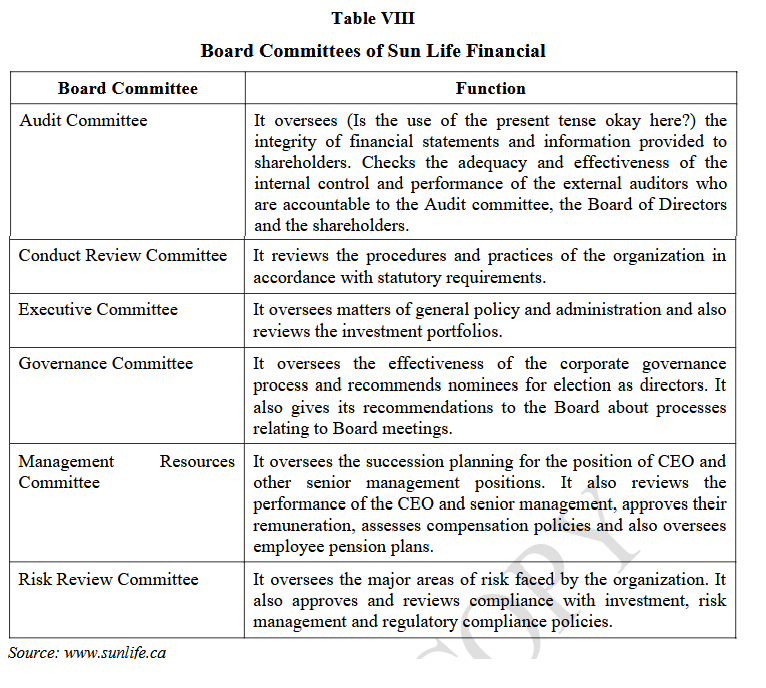
Sun Life‘s board approved a charter that outlined its overall responsibilities, including norms for the selection, evaluation and compensation of the CEO and other senior executives. In addition, the charter specified the guidelines for: succession planning for senior positions; approving strategic plans and monitoring performance against the plans; approving the risk management framework for the enterprise; approving material transactions; and, reviewing the performance of the company. Sun Life had a Lead Director, whose responsibilities included ensuring independent management of the Board. Sun Life's board had six committees, to assist in carrying out its responsibilities – members of board committees were non-management directors (Refer Table VIII).
The board had six scheduled meetings every year with additional special meetings held whenever necessary. Most of the board committees met quarterly to discuss the company's affairs, and a yearly Directors' seminar was held to provide non-management directors with the background to and perspective on the company‘s ongoing activities. A comprehensive orientation program was also given to new directors. To promote greater alignment of interests between the non-management directors and shareholders, the board adopted a share ownership policy which required every non-management director to acquire 2000 common shares or the number of shares equivalent to three times the value of the annual Board retainer (C$26,000 per year), whichever was less.
In 2001, Sun Life's management adopted a charter and mission statement, revised the charters for each of the board committees and also updated the description of the post of the Lead Director. It also introduced a formal peer review process for directors and undertook a 'board effectiveness review' exercise.
Better Business Bureau, Inc., a public serving organization based in Eastern Massachusetts, awarded Sun Life (USA) the 2002 Torch Award for Excellence, for its corporate governance and ethical business practices. The Torch Award was intended to honour outstanding businesses that were committed to promoting ethical business practices. Sun Life was given the award for its integrity and for consistently meeting very high standards in its relationship with customers, employees, vendors/suppliers and industry peers. Sun Life won the award in the large business category (1,000 – 1,500) employees. It was judged on the following criteria:
- High ethical standards of behaviour toward customers, suppliers, shareholders, employees, and communities in which the company does business.
- Demonstrated ethical practices surrounding its buyer/seller relationships.
- Longstanding history/reputation of ethical practices in the marketplace.
- Marketing, advertising, communications, and sales practices, which reflect a true representation of what, is being offered in the marketplace.
- Acknowledgment of ethical marketplace practices by industry peers and in the communities where the company does business.
- Management practices and policies that give long-term value to shareholders, customers, employees, vendors, and surrounding communities.
- Training programs that assist employees in carrying out established ethics policies.
Social Responsibility
Sun Life believed that corporate responsibility for a company extended beyond day-to-day business practices. It provided support for many social causes in countries where it operated. The company supported various non-profit organizations offering services in the areas of health, culture, education and environment. It also encouraged its employees to contribute generously for the victims of the September 11, 2001 terrorist attacks in the US, and offered financial help for the victims of the January 2002 earthquake in Gujarat, India.
Sun Life offered support to the 'Heroes of Hope‘ campaign for raising money to construct and equip the Durham region‘s12 first cancer centre. The centre was staffed by professional oncologists, and was equipped with state-of-the-art technology. In 2002, Sun Life agreed to sponsor the Canadian Foundation for AIDS Research (CANFAIR)'s national campaign – 'Have a Heart‘. The campaign was a bilingual project, which encouraged Canada‘s youth to work together towards the goals of increasing awareness and prevention of AIDS, and of raising funds to support research into a cure for HIV infection.
FINANCIAL PERFORMANCE
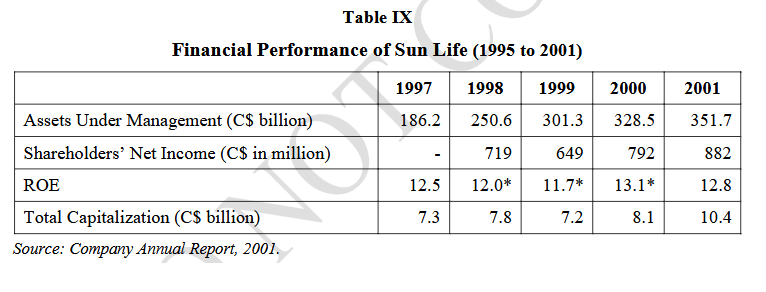
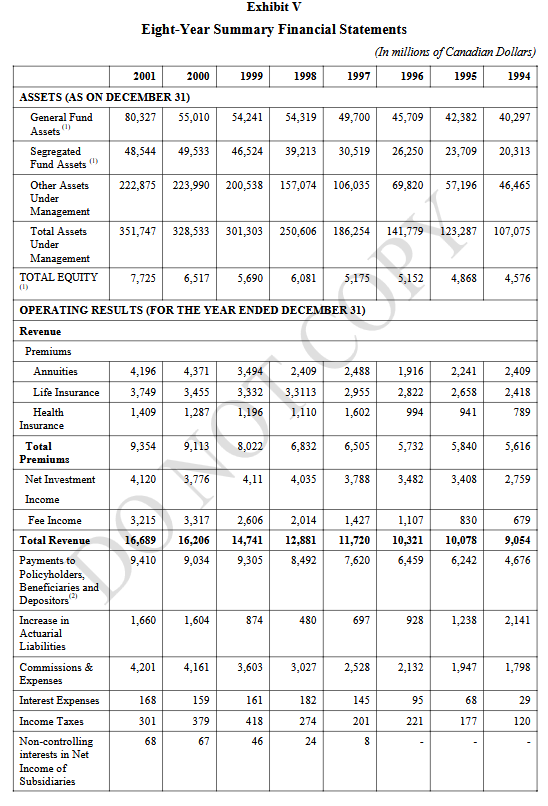
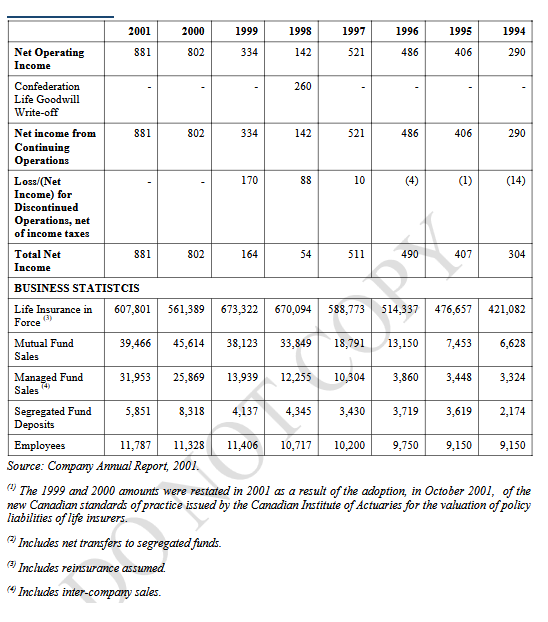
Sun Life's revenues increased to C$16.7 billion in 2001 from C$16.2 billion in 2000, an increase of C$483 million or 3% (Refer Table IX for Sun Life‘ financial performance summary). The company's strong performance in insurance premiums and higher investment income was offset by decreases in annuity premiums and fee income. In 2001, ROE declined to 12.8% from 13.1% in 2000 – this decrease was attributed to the increased equity base in 2001. Another reason for the decrease was that Sun Life had invested some excess funds, which had been raised for the acquisition of Keyport Financial, in low-yield short-term securities. This adversely affected the
company's overall performance in 2001. Sun Life was not severely affected by the September 11 attacks, as it was not directly involved in the property and casualty insurance business, and was not involved in underwriting individual life insurance policies in the state of New York.
In 2001, the operating expenses of the company increased to C$2.5 billion from C$78 million in 2000. The increase was attributed to the restructuring and outsourcing activities of the UK operations, the acquisition of Keyport Financial and the unfavourable impact of currency translation. The money for the acquisition was raised through an IPO of C$500 million. In 2001, company also adopted new accounting standards and policies, but these did not have any significant impact on the company's financial results. Investor Relations13 magazine selected Sun Life for the Best Investor Relations Award for an IPO. The magazine surveyed around 250 fund
managers, analysts, retail brokers and investors in order to select the winner.
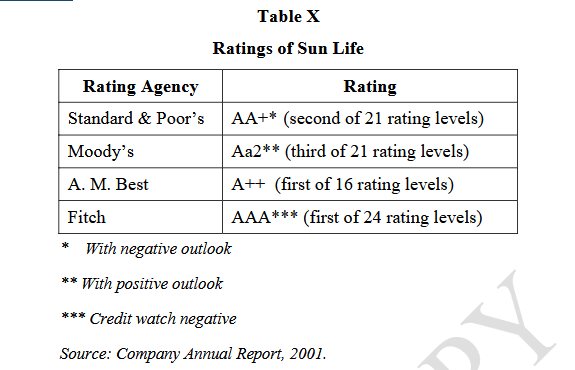
Sun Life had good ratings from various independent-rating agencies for its financial strength. It was placed among the top companies in the financial services sector in North America. The ratings indicated the group‘s extremely strong consolidated capital, strong business profile, and strong operating performance. It was ranked 'very strong‘ by S&P, Moody‘s ranked it as a company with 'excellent financial security‘, while A. M. Best rated it 'very strong‘ (Refer Table X).
Sun Life was converted into a shareholder company from a mutually held company, in 2000, after policy owners voted for its demutualisation. After this, it was listed on the New York, Toronto, London and Philippines stock exchanges. By 2001, Sun Life‘s total capitalization increased to C$10,405 billion from C$ 8,166 billion in 2000.
FUTURE OUTLOOK
With the acquisition of Keyport, IFMG and Clarica, Sun Life emerged as one of the largest players in the North American insurance markets in 2002. The company‘s management stated that it would strive to consolidate its business operations and achieve its objective of being among the top ten players in the North American market. Analysts pointed out that with the enactment of new financial services legislation in Canada in late 2001, consolidation in the industry would increase, and by 2004, the Canadian insurance market would be dominated by only three or four players. Analysts felt that the acquisition of Clarica would help Sun Life in consolidating its position in the Canadian market. However, they pointed out that integration of the operations would be very critical. Agreeing with this observation, Sun Life stated that it would try to consolidate its position through operational efficiencies and financial strength.
Analysts also felt that in order to consolidate its position in the Canadian and international markets, the company would have to focus on building stronger customer relations through its innovative and value-added products and services. It was also pointed out that company would have to focus on operational efficiencies and capital optimization in order to enhance its financial performance. In line with its decision to exit from non-profitable markets, Sun Life had exited from the U.K individual insurance business, and had initiated cost savings measures on a large scale.
In its Asian operations, Sun Life identified India and China as growing markets, and planned to increase its exposure in those markets with more investments. According to insurance industry observers, Sun Life projected a positive outlook for the year 2002 and beyond. This was largely because the North American insurance industry was expected to turn around soon with the changing business cycle.
THE GLOBAL LIFE INSURANCE INDUSTRY
Insurance is essentially a social device to reduce or eliminate risk of loss to life and property. A large number of people form an association that shares risks attached to individuals. The risks, which can be insured against, include fire, the perils of sea, death, accidents and burglary. Any risk contingent upon these may be insured against at a premium commensurate with the risk involved. The insurance business is divided into 1) life insurance and 2) non-life (general) insurance, which includes fire, marine, social, and various other forms of insurance. The life insurance industry across the world has evolved over many decades based on the principle of insurance being a collective bearing of risk, which offers individuals an opportunity to protect themselves.
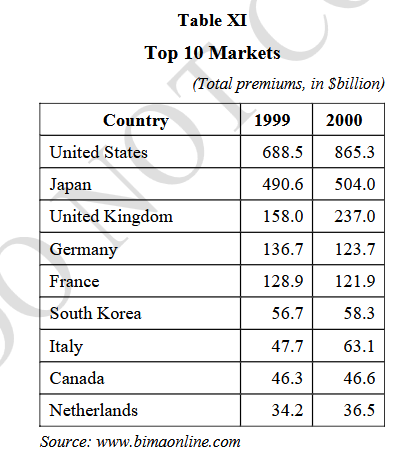
According to a survey conducted by Swiss Re,15 during 1990-2000, total world insurance premiums increased by 72.8%, and in the same period, the life insurance business grew by 104.6%. In 2000, life insurance accounted for 62% of the total worldwide premiums while non-life accounted for the remaining 38%. The total premiums worldwide in 2000 were $2,244.3 billion and North America constituted the largest market for the insurance industry. It contributed around 37.32% of the total premiums in 2000.
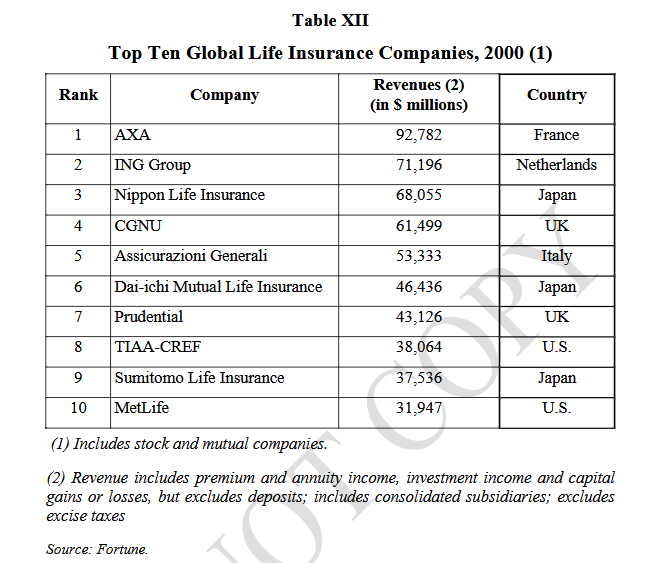
US emerged as the largest market for insurance in 2000 with total premiums of $865.3 billion, followed by Japan with $504 billion. According to analysts, with reforms having been initiated in the insurance sector in China and India, they had emerged as the largest and most attractive markets for many global players (Refer Tables XI and XII).
In the late-1990s, the global insurance industry underwent great upheavals. The changes in the industry included-- new channels for distribution of insurance products; consolidation in insurance markets across the world; globalization; new technology; and, changes in regulations for the industry. During this period there was a spate of acquisitions, takeovers and mergers, in many parts of the world. According to industry watchers, only companies with a huge capital base, would be able to achieve global dominance and establish presence in all the lines of the highly competitive industry. However, it was also being felt that with the falling stock markets in many countries, it would be very difficult for companies to raise money for acquisition/merger/takeover deals to establish themselves as big players.
Companies that focused on their areas of core competency were likely to emerge as the most successful. Analysts expected that outsourcing of non-core activities would increase and there would also be an increasing number of strategic alliances with financial services and non-financial services companies in the future.
The Internet was expected to become a strong channel for the distribution of simple products in the insurance industry. But some analysts pointed out that distribution in the insurance industry was 'self selected‘ by consumer and in the Internet age it would be difficult to retain customers. On the other hand, it was expected that the Internet would support complex business models by integrating all methods of distribution, besides reducing costs for companies and simplifying the claims-management process.
Advancements in health care were helping extend the lifespan of people across the globe. At the same time, in several countries, governments were withdrawing from providing extensive healthcare facilities to citizens. These factors fuelled the growth of the products relating to savings for retirement and healthcare. Although conventional life insurance products continued to dominate the market, analysts expected that there would be rapid growth in wealth management products, which gave the consumer a wide investment choice. In the US, it was expected that life insurance would be linked with investment choice and fund management. Also, many life insurance agents were expected to become personal financial planners.
Most importantly, insurance markets were being deregulated worldwide, leading to the emergence of universal financial services rather than the conventional stand-alone banks, insurers and brokerage firms. This seemed to affect the Asian industries the most, particularly those in Malaysia and Singapore. Simultaneously, there were more regulations regarding the way products could be sold. An analyst at Price Waterhouse Coopers said, "There is a shift from regulation of what is sold by a particular institution to regulation of how it is sold." Many countries were forming regulatory bodies for this purpose, such as the Financial Services Authority in the UK, APRA in Australia and IRDA in India.
Many analysts felt that national borders were no longer important in the industry-- labour-intensive tasks were being shifted to low-wage countries, using the Internet. Many US companies shifted service centres to Canada in order to reduce processing costs. Claims management, policy administration, accounting and underwriting were the processes most suited to this kind of relocation. Many European companies were establishing back-office operations in countries like India.
The importance of branding came to be strongly established. Brands for financial services, including insurance products, came to be as promoted as strongly as brands for consumer product brands such as Coca-Cola or Levi‘s. Many global companies, such as Allianz, AXA and ING, were establishing their own brandnames across the world. Companies like Sun Life of Canada, HSBC in Hong Kong and Tokio Marine and Fire in Japan, which had strong domestic brands, were now concentrating on building up a global brand.
THE CANADIAN LIFE INSURANCE INDUSTRY
Canada, like the US, is a high-tech industrialized country. Its market-oriented economic system, pattern of production, and high living standards are points of similarity with the US. Canada had an annual growth rate of 3% on average since1993. In the same period, unemployment was falling and government budget surpluses were being diverted to the reduction of public sector debt. There was a dramatic increase in trade and economic integration with US due to 1989 US-Canada Free Trade Agreement and the 1994 North America Free Trade Agreement (which included Mexico).
The Canadian insurance market consisted of about 230 private property and casualty insurers, and 27 providers of insurance for life and accident and sickness. In the general insurance category, automobile insurance constituted largest single class of general insurance in Canada followed by property insurance and liability insurance. Federal and provisional governments governed general insurance operations in the country. The life insurance and health insurance market was divided into: life insurance, retirement & investment products, and health insurance products.
The Canadian life and health insurance industry comprised 117 firms – 107 publicly traded companies and 10 mutual companies. As in the insurance industry in other countries, the Canadian life insurance industry was also undergoing consolidation mainly through the sale of firms by foreign insurers to Canadian insurance companies. The top five companies held approximately 57% of the Canadian life and health insurance market. It was reported that Canadian-controlled firms were gaining market share while that of foreign insurers was declining.
Insurance in Canada was distributed through full-time career agents, who represented a single company, and also through independent agents, who sold the products of several insurers. Both career and independent agents were paid commissions on sales. Career agents usually received additional payments such as pension benefits and access to employer-paid training. In Canada, though most individual insurance products were sold through agents, other distribution channels, such as telephone and mail solicitation, and sales through the Internet, were gaining acceptance fast. Total premium income in 1999 was $39.4 billion, of which the life insurance business contributed around 27%. Total premium income increased by 9.7% in 1999, above the annual average rate of 6.4% over the 1990s. Besides Sun Life, the other strong players in the Canadian life insurance market were Manulife, Great-West, Canada Life and Industrial Alliance.
In 1997, the Canadian government formed a task force on the financial services industry for restructuring the regulatory environment of the financial services industry to make it more competitive. In line with the recommendations of the task force, the government allowed mutual companies to go in for demutualization. This was considered an important turning point in the country‘s insurance industry. According to analysts, this decision allowed the insurance industry to move towards consolidation. Companies could now expand their international operations through money raised in the capital markets.
By the end of 2000, there were around 120 life and health insurance companies in Canada. Canadian companies held $267.1 billion in assets on behalf of Canadian life and health insurance policyholders. Most of the funds with Canadian life insurers were invested in government bonds, corporate bonds, stocks and mutual funds. In 2000, it was reported that Canadian health and life insurers generated $49.1 billion revenues form foreign clients for life insurance, health insurance and annuities and according to reports, 12.6 million people in more than 120 countries outside Canada owned life policies with Canadian companies.
In 2001, Bill C-8 was passed by the Canadian parliament. This bill would increase the competitive flexibility of life and health insurers through various enhancements including the ability to set up holding companies, and access to the national payments system.
EXHIBITS
Exhibit I
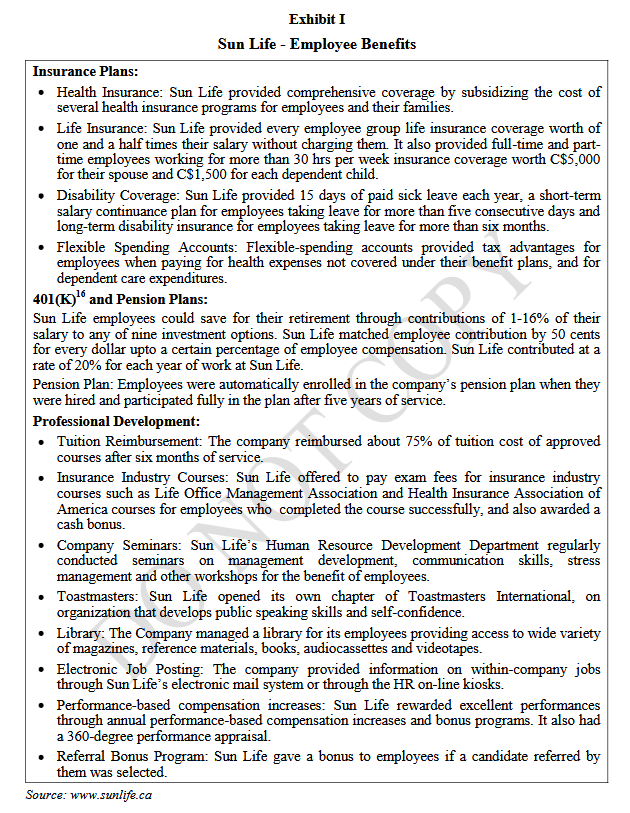
Exhibit II
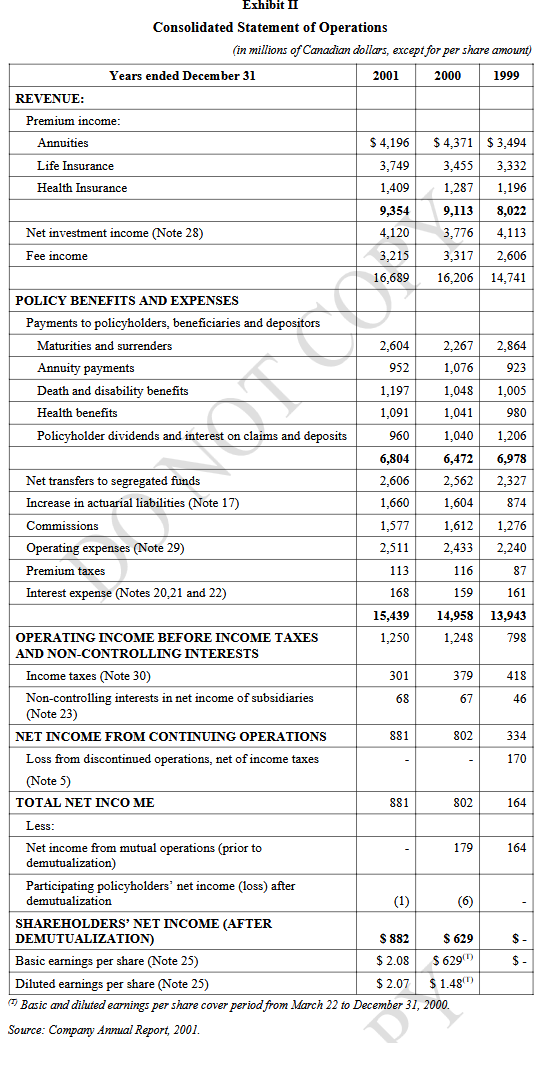
Exhibit III
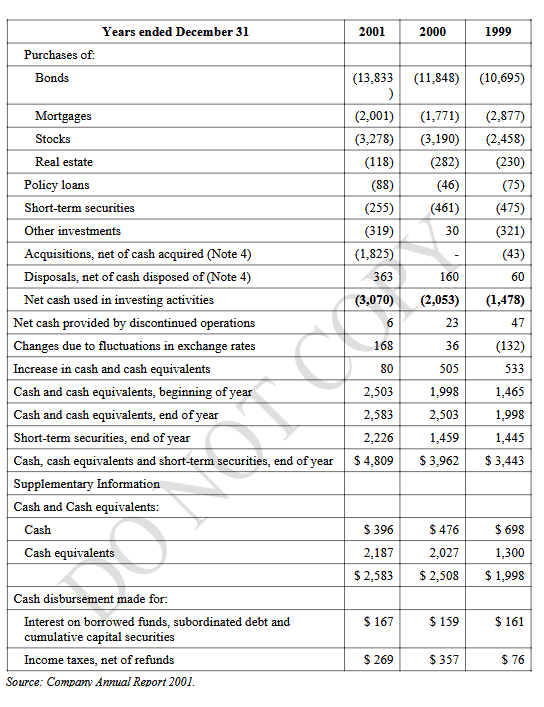
Exhibit IV
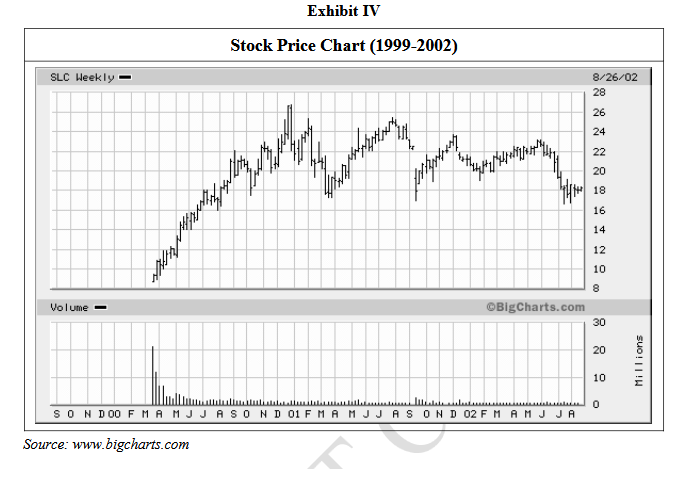
Exhibit V
Keywords
Sun Life Financial Services, Canadian life insurance market, History of Sun Life, Mergers and acquisitions, Products and services, Globalisation strategies, Marketing strategies, Human resources strategies, Corporate governance, Global life insurance market
Related Case Studies
| Case Title | Details |
|---|---|
|
Case Title Iridium: Making a ComebackCase Code: CLBS048 |
Details |
|
Case Title Evolution of InfosysCase Code: CLBS034 |
Details |
|
Case Title The Fall of Daewoo MotorsCase Code: CLBS030 |
Details |
|
Case Title Reinventing Cadbury (Caselet)Case Code: CLBS024 |
Details |
|
Case Title The Resurgence of Radio in IndiaCase Code: CLBS021 |
Details |